
Sperm tail-tracking technique could improve male fertility testing

“Should we be using new tool of Flageliar Analysis and Sperm Tracking ( FAST)?”

INTRODUCTION: Can flagellar analyses be scaled up to provide automated tracking of motile sperm and does knowledge of the flagellar waveform provide new insight not provided by routine head tracking? The clinical gold standard for sperm motility analysis comprises a manual analysis by a trained professional, with existing automated sperm diagnostics.

computer-aided sperm analysis (CASA)] relying on tracking the sperm head and extrapolating measures. It is not currently possible with either of these approaches to track the sperm flagellar waveform for large numbers of cells in order to unlock the potential wealth of information enclosed within.


SUMMARY: Using the software tool IFlagellar Analysis and Sperm Tracking (FAST)! Gallagher et al’ analysed  176 experimental microscopy videos and have tracked the head and flagellum of 205 progressive cells in diluted semen (DSM), 119 progressive cells in a high-viscosity medium (HVM) and 42 stuck cells in a low-viscosity medium. The software tool in this manuscript has been developed to enable high-throughput, repeatable, accurate and verifiable analysis of the sperm &Filar beat. Unsc reened donors were recruited after giving informed consent. They described fully automated tracking and analysis of flagellar movement for large cell numbers. The analysis is demonstrated on freely motile cells in low- and high•-viscosity fluids and validated on published data of tethered cells undergoing pharmacological hyperactivation. Direct analysis of the flagella,- beat reveals that the CASA measure ‘beat cross frequency’ does not measure beat frequency; attempting to fit a straight line between the two measures gives R2R2 values of 0.042 and 0_00054 for cells in DSM and I-IVM, respectively. A new measurement, track centroid speed, is validated as an accurate differentiator or progressive motility. Coupled with fluid mechanics codes, waveform data enable extraction of experimentally intractable quantities such as energy dissipation, disturbance of the surrounding medium and viscous stresses. They provide a powerful and accessible research tool, enabling connection of the mechanical activity of the sperm to its motility and effect on its environment. The FAST software package has only been tested for use with negative phase contrast microscopy. Other imaging modalities, with bright cells on a dark background, have not been tested but may work. FAST is not designed to analyse raw semen; it is specifically for precise analysis of flagellar kinematics, as that is the promising area for computer use. flagellar capture will always require that cells are at a dilution where their paths do not frequently cross.

CONCLUSION: High-throughput flagellar waveform tracking and analysis enable measurement of experimentally intractable quantities such as energy dissipation, disturbance of the surrounding medium and viscous stresses, which are not possible by tracking the sperm head alone. Combining tracked flagella with mathematical modelling has the potential to reveal new mechanistic insight. By providing the capability as a free-to-use software package, ability to accurately quantify the flagellar waveform in large populations of motile cells will enable an abundant array of diagnostic, toxicological and therapeutic possibilities, as well as creating new opportunities for assessing and treating male subfertility.

SOURCE: https://www.indianfertilitysociety.org/fertility-news-august-2019-volume-11/

Mohak infertility center Indore provides a reasonably priced IVF treatment and Test Tube Baby treatment to achieving pregnancy. Call +917898047572 to schedule a meeting from best IVF Centre in IndoreTest Tube Baby Centre in Indore from qualified IVF specialist in Indore. book an appointment : https://www.mohakivf.com

Please go through our social media :
like our page to no more about ivf
Facebook :  https://www.facebook.com/MOHAK-IVF-1167147806785287/
Please do follow on Instagram
Instagram : https://www.instagram.com/mohak_ivf/

To More Post: IVF and chances of Twins



IVF and chances of Twins

Studies say that one out of five pregnancies due to IVF may result in multiple births. Usually, it is seen because during IVF, sometimes multiple embryos might be inserted into the uterus in order to increase the chances of giving birth to twins. Because of this, sometimes more than one embryo gets implanted in the uterine lining and result in twin pregnancy.


Although, even a single embryo can lead to a twin pregnancy in case of IVF when one egg may split and lead to the formation of two zygotes. These are termed as monozygotic twins. While in the case of twins as a result of two separate eggs are called Dizygotic twins. This is a result of transferring two or more embryos in the uterus.


IVF treatment proved to be a blessing for the women who are unable to conceive normally or in other words, are infertile. This medical procedure increases the chances of a woman to get pregnant after trying naturally for long.

Why sometimes IVF results in multiple births?

The prime reason for multiple pregnancies as a result of IVF is because of transferring many embryos at the same time. In the hope of achieving a better possibility of success, doctors sometimes routinely transferred multiple embryos. The main reason behind this is that most of the embryos can have chromosomal abnormalities, i.e., they are not actually viable. This is applicable in both the cases whether the embryo is conceived naturally or through the assistance process, IVF. With the increase in women’s age, the proportion of abnormal eggs increases as well. The reason behind this is that the quality of eggs tends to decline over the years. With the hope that at least one of the embryos would survive, doctors place two or more embryos inside the uterus simultaneously thinking that it would increase the rate of pregnancy. This lead to cases of multiple pregnancies as most of the times, more than one embryo get successfully implanted.

How can we avoid the chances of twins because of IVF?

Most of the leading experts in the field of fertility now go for eSET (elective single embryo transfer) and consider it to be the best practice for most of the IVF cycles. During the ovarian stimulation process, sometimes the woman may produce a large number of eggs and also can have a considerable number of viable embryos available. And the doctor still may suggest transferring only one embryo.

Every IVF cycle is one of a kind and never can we have a single answer that it is right for all. The women going through IVF cycle and her doctor can assess the risks and analyse the benefits of eSET in comparison to multiple transfers in her case. In some of the cases, fertility doctors can still go for transferring more than one embryo. This is mostly seen in the cases of older patients who already had multiple failed attempts.

Becoming a mother is like a dream come true but for some mothers the dreams often start as scary nightmares like Infertility problems. Mohak infertility center is one of the best infertility treatment and Best infertility hospital in indore. provides an all round approach to infertility and advises you with the best available treatment options. We provide affordable IVF treatment cost in IndoreICSI treatment in Indore along with various other remedies. With a large number of satisfied patients and families Mohak IVF centre is now being recognized as one the best IVF centre and Best fertility hospital in India. visit for more details : https://www.mohakivf.com  and call us 78980-47572 / 80852-77666.

Please go through our social media :

like our page to no more about ivf

Facebook :  https://www.facebook.com/MOHAK-IVF-1167147806785287/

Please do follow on Instagram

Instagram : https://www.instagram.com/mohak_ivf/

To More Post: Failed IVF: Not an end to life

How BABY grow in the womb, journey from birth to Pregnancy

It is the priceless moment for a woman to give birth to a new life from her womb. During the period of pregnancy, she dreams of so many things in this period. The feeling in the mind of the woman about how the fetus is developing, what she is doing and how big is the baby in the womb. Other family members also take care of women during this time.

Which time is better for pregnancy? 

Time of ovulation (egg in fallopian tube) is beneficial to have sexual intercourse. It is most likely to have the chance of fertilization of sperm and egg. Within 5-6 days of fertilization in the tube, the embryo sticks to the surface by entering the uterus which is called as transplant, during which women may experience light bleeding or spotting, which is normal. The womb is born in the uterus and is fully prepared to develop itself.

How to know that you are pregnant?

Generally the woman does not get to know that she has conceived in the beginning, after the fourth week of the previous period, if there is no menstruation, then the pregnancy test should be done. If test comes positive, then it may cause some weakness, fatigue, sudden mood swings and vomiting.
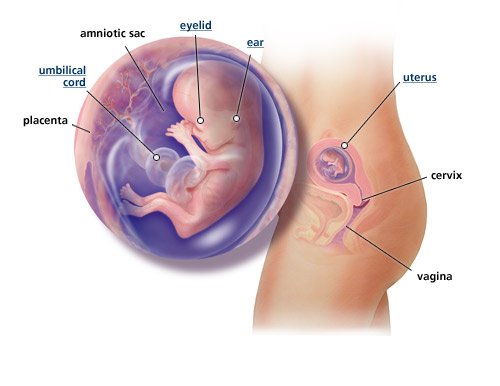
As the embryo develops, the water sac (amniotic sac) starts to form around it, which works as pillows for it. During this time, placenta (organs similar to a round disk) begins to form and it connects the mother and infant (embryo) through which the nutrients pass from mother to the baby.

How Baby grows?

First month– The face of the baby starts to shape, mouth, eyes, lower jaw and throat are also form and blood cells begin to form to start blood flow. By the end of the first month, the size of the embryo is smaller than rice grain.


• Second month – The face develops more, gradually the two ears begin to form, both hands – legs and their fingers, the dietary tubes and bones are also starts. The baby’s beating can be seen through sonography in the sixth week. A neural tube forming the brain and spinal cord, the ability to feel develops in fetus. By the end of this month the infant develops to 1.5 cm and weighs around 1 gram.


Third month– Important for the development of infant, also called period of organogenesis. By this time, the face of the infant, ears, hands and feet will have been completely formed. Nails begin to form and genitalia begin to grow. By the end of this month the heart, arteries, liver and urinary systems start working. The length of the baby is 5.4 centimeters and the weight is 4 grams.Woman has to take special care of her as this is the critical period of development. If there is any problem, then you should not take medicines without a doctor’s consult. The woman begins to have emotional attachment to the baby by this period.


• Fourth month– Eyes, eyebrow, nails and reproductive organs develop. Tooth and bones begin to grow stronger. Now the baby starts swirling, turning the thumb etc. This month, the Fetal Doppler machine can hear baby’s beating for the first time. Generally, the doctors give you the date of delivery, the weight of the baby is 100 grams and the length is 11.5 centimeters.

Fifth month– Head hair starts forming, shoulder, waist and ears are covered with hair. These hairs are very soft and brown. These hairs fall by the first week after birth. By this time the infant’s muscles develop and start the stir which the mother can feel. By the end of the month weight weighs 300 grams and length 16.5 centimeters.


• Sixth month– The baby’s color is red from which the arteries can be seen. At this time, the ability of the baby to feel is increases and he feels the sound of music and gives feedback on it. By the end of this month, it weighs 600 grams and lengths to 30 centimeters.


• Seventh month – Fat increases in the baby, its ability to hear his voice increases further, gives his reaction to the light and keeps changing his position as quickly as possible. By this time the infant has developed so much that if there is a pre-maturity delivery for some reason then he can survive.


• Eighth month – The movement of the baby increases more and the mother can feel very well. At this time, the brain develops rapidly and it can also see with the hearing. The development of all other physical organs except the lungs has been completed. In this month the baby weighs 1700 grams and the length is 42 cm.

Ninth month – Baby’s lungs are also completely formed. The movement increases, the blinking of the eyelids, the eyes closed and head rotates and the ability to catch is also developed. By the end of this month, the movement of the baby starts decreasing due to less space in the uterus. At this time, the baby weighs 2600 grams and length 47.6 centimeters.


Now the baby is ready to come into the world and starts coming down slowly. Normally the baby’s head comes out first at birth. Traveling from a woman’s pregnancy to a child’s world is unique and has many types of experiences.

Mohak infertility center is one of the Best infertility treatment in Indore that offers low cost IVF Treatment. The infertility treatment center is located near Indore-Ujjain state highway,  MR-10 crossing with peaceful surrounding making it an ideal location for IVF center in Indore. Book an Appointment Now Call 78980–47572 / 80852–77666 For more detail visit www.mohakivf.com

Please go through our social media :

like our page to no more about ivf

Facebook :  https://www.facebook.com/MOHAK-IVF-1167147806785287/

Please do follow on Instagram

Instagram : https://www.instagram.com/mohak_ivf/

To More Post: Sleep disturbances may be associated with impaired fertility

Failed IVF: Not an end to life

The need for IVF comes when a couple is having trouble to have baby, and then failure of IVF becomes another cause for disappointment. It is not easy to accept that you cannot have a baby after all the possible efforts. But this is not the end to possibilities. The first failed IVF cycle provide us with the information to make the next IVF treatment successful. Several issues seen in a previously unsuccessful IVF attempt may be addressed to eliminate or reduce the possibility of a single issue occurring in a second attempt with IVF.

There is a lot of grief and pain, most of the people start blaming one another. Was the doctor negligent or simply incompetent? Or has the patient neglected the health instructions given to him/ her? The reality is that we can understand a lot by a failed cycle. It is therefore important to generate a process, and to evaluate the redundant IVF cycle for improvement of the success rate in subsequent effort.

Give yourself time and allow grieving:

The heartbreaking news of the failing of your IVF cycle is quite disappointing. It is okay and natural to feel that way. It is necessary to take time to deal with the hurt caused to you; otherwise the feelings of depression will not go away.

Keep yourself away from the blame-game:

It is obvious that after a failed cycle of IVF one can expect some degree of anger and anxiety, let it fade away, or it can be disastrous. You need to understand the actual reason of failure of the cycle. And avoid any thoughts of blaming each other.  Usually the patient starts blaming God for their distressed situation but it also will not help. You need to keep yourself very much away from such blame-games.

Consultation with experts:

Consultation with a fertility specialist can be extremely beneficial. Many people gain a lot of strength by attending counselling sessions with fertility experts or family counsellors. As low as you may feel there is always a ray of hope.

Get focused on your follow-ups with the fertility specialists:

Whenever you feel that you are ready, you should make appointment with fertility specialist to review the cycle. Get all your doubts about the success rate, failure chances about second IVF effort and understand the differences. Avoid making any decisions until you take follow-up with your doctor. By this you will be able to understand the required changes that are needed to incorporate into the protocol to help you in later cycle. Your doctor may suggests some new techniques and few more fertility screening to be get done.

Apply changes to your lifestyle:

New fertile lifestyle activates your brain for the new and better strategies that are being introduced to the body, so it can expect better results. These changes can be as quitting alcohol and smoking, exercising, Weight management, healthy diet, etc.

Take care of your relationship:

As with any painful trauma, an unsuccessful IVF cycle put a lot of grief and depression in your mind and can interfere with your relationship. For some couples, the relationship itself may be less important than the goal of having a child. Remember to support your relationship with your partner, spend more time together and understand each other’s pain. The love between you as couple is very important to nurture a new life as parent.

Are you looking at the Best Hospital for Infertility Treatment in Indore, India? Mohak infertility center: We provide the IUI, IVF, ICSI treatment, Infertility Treatment and test tube baby treatment in India within your budget. Contact us for the right guidance about Infertility treatment and IVF Treatment. More information Call us 78980-47572 / 80852-77666 online visit – https://www.mohakivf.com

Please go through our social media :

like our page to no more about ivf


Facebook :  https://www.facebook.com/MOHAK-IVF-1167147806785287/

Please do follow on Instagram


Instagram : https://www.instagram.com/mohak_ivf/

To More Post: Sperm quality improve by frequent ejaculation rather than abstinence

Sperm quality improve by frequent ejaculation rather than abstinence

“Do we need to update IVF protocols to use semen from shorter periods of abstinence?”

Introduction: Men have usually been advised to limit sexual activity to increase the chances of pregnancy. A new study suggests sperm quality and pregnancy outcomes in IVF may be improved with frequent ejaculation.

Summary: Research carried out Da Li et aVaimed to determine the effects of a short period of abstinence on the quality of ejaculated sperm, as well as its effect on the pregnancy outcomes of 500 couples undergoing EVE Major molecular differences were seen between samples of semen depending on the duration of abstinence. Ejaculates from short (1-3 hours) compared with long (3-7 days) periods of abstinence showed increases in motile sperm count, sperm vitality, normal sperm morphology, acrosome reaction  capacity,  total antioxidant  capacity,  sperm  mitochondria’  membrane  potential,  high  DNA stainability and a decrease in the sperm DNA fragmentation index (P<0.05). Sperm proteomic analysis showed 322 differentially expressed proteins (minimal fold change of ±1.5 or greater and P < 0.05), with 224 up-regulated and 98 down-regulated. These differentially expressed proteins are profoundly involved in specific cellular processes,  such as  motility and capacitation, oxidative stress and metabolism. Interestingly, protein trimethyllysine modification was increased and butyryllysine, propionyllysine and malonyllysine modifications were decreased in ejaculates from a short versus long abstinence (P < 0.051 Finally, the rates of implantation, clinical pregnancy and live births from in vitro fertilization treatments were significantly increased (by one-third in this study) in semen samples after a short abstinence. This study provides preliminary mechanistic insights into improved sperm quality and pregnancy outcomes associated with spermatozoa retrieved after a short ejaculatory abstinence.

Conclusion: These results collectively suggest that having more frequent sex produces sperm of a better quality and increases the likelihood of a successful pregnancy. Specifically, semen samples collected after only one to three hours of abstinence contained more motile sperm with a higher reproductive potential than samples collected after men who had abstained for three to seven days.

References*: Zi-Qi Shen, Bei Shi, Tian-Ren Wang, Liao Liao, Xuejun Shang, Qi-fun Wu, Yi-Ming Zhou, Tie-Feng Can, Qiang Du, Xiu-Xia Wang and Da Li. Characterization of the Sperm Proteome and Reproductive Outcomes with in Vitro Fertilization after a Reduction in Male Ejaculatory Abstinence Period. Molecular & Cellular Protearnics August 20, 2018, mcp.RA117.000541; https://doi.org/10.1074/mep.RA11 2000541

Source:  https://www.indianfertilitysociety.org/fertility-news-october-2018-volume-3/

If you are suffering from infertility problems and looking out for the Best IVF Center in Indore, India then there is no better place for you than Mohak infertility center. We deliver all the infertility treatment for men and woman at an affordable cost with the assured outcome. To book an appointment with the best IVF specialist at the best IVF center in MP, Indore, Call- 78980-47572 / 80852-77666 and online visit –https://www.mohakivf.com

Please go through our social media :

like our page to no more about ivf 
Facebook :  https://www.facebook.com/MOHAK-IVF-1167147806785287/

Please do follow on Instagram 

 Instagram : https://www.instagram.com/mohak_ivf/

To More Post: FET may be more vulnerable to a suboptimal environment

Cochrane Review Series

Question: Are ovarian stimulation protocols combining oral medications like Clomiphene citrate or Letrozole with gonadotropins effective and safe compared to gonadotropins alone in women undergoing In-vitro fertilization (IVF)?

Focus: Regimens using oral ovulogens and gonadotropins versus gonadotropins alone for women undergoing IVF.
Population Of Interest: Unselected IVF population of subfertile women undergoing controlled ovarian stimulation for IVF and ‘poor’ responders
Intervention Under Investigation: Clomiphene citrate (CC) or Letrozole (Ltz) with gonadotropins for controlled ovarian hyperstimulation (COH).
What Was The Comparison? : Gonadotropins alone for COH
What Were The Main Outcomes?: Live birth rate (LBR), ovarian hyperstimulation syndrome (OHSS) rate and cycle cancellation rate.

Results In Short: 

  • Twenty-two trials including 3599 women undergoing IVF.
  • Live birth rate: No difference in live birth rate following ovarian stimulation with CC or Ltz with gonadotropins versus gonadotropins alone (Risk Ratio (RR) 0.92, 95% confidence interval (CI) 0.66 to 1.27; 4 RCTs, 493 women, low-quality evidence) in the general IVF population1. No difference in live birth rate following ovarian stimulation with CC or Ltz and gonadotropins versus gonadotropins alone (RR 1.16, 95% CI 0.49 to 2.79, 2 RCTs, 357 women, low-quality evidence) among poor responders.
  • OHSS rate: Significantly lower incidence of OHSS following stimulation protocols using CC or Ltz with gonadotropins versus gonadotropins alone (Peto OR 0.21, 95% CI 0.11 to 0.41, 5 RCTs, 1067 women, low-quality evidence) in the general IVF population.
  • Cycle cancellation rate: Significantly higher cycle cancellation rate with CC or Ltz and gonadotropins versus gonadotropins alone (RR 1.87, 95% CI 1.43 to 2.45, 9 RCTs, 1784 women, low-quality evidence) in the general IVF population.
  • Number of gonadotropin ampoules and number of oocytes retrieved: Decrease in number of gonadotropin ampoules used and mean number of oocytes collected when CC or Ltz with gonadotropins was used compared with gonadotropin-only regimens (moderate quality evidence) in the general IVF population and poor responders.

Limitation: 

  • Only six among 22 included studiesreported live birth rates as primary outcome, necessitating cautious interpretation of overall results.
  • Studies included only fresh stimulated IVF cycles. None of the trials addressed surplus frozen embryos available for subsequent transfer; thereby data for cumulative live birth was not available. Currently, cumulative live birth rate is a more preferred outcome to evaluate effectiveness of IVF treatment.
  • Studies that assessed poor responders used varied criteria for inclusion thereby introducing clinical heterogeneity.
  • Lack of blinding in most included trials, poor reporting of methodology, differences in protocol and cycle cancellation policy impacted the overall quality of evidence.

Evidence Based Practice Points

  • Current weight of evidence suggests comparable live birth rates between CC or Ltz and gonadotropins versus gonadotropins alone,in both the routine IVF population and among poor responders. It is a viable alternative protocol in certain clinical scenarios like poor responders.
  • Addition of CC or Ltz reduces gonadotrophin requirement and incidence of ovarian hyperstimulation syndrome. Reduced gonadotrophin requirement could reduce initial treatment cost.
  • Higher cancellation rates and lower oocyte yield following use of CC or Ltz with gonadotrophin is a drawback. Cancellation of cycles can be psychologically distressing for the couples.
  • There has been a shift of contemporary practice towards maximizing oocyte yield in single retrieval cycle and “freeze all policy” due to higher cumulative live birth rate2. In light of these developments, studies evaluating cumulative live birth following milder stimulation protocols using CC or Ltz with gonadotrophins are needed along with cost effectiveness in order to establish their role in current IVF practice.

Reference: 
1.Kamath MS, Maheshwari A, Bhattacharya S, Lor KY, Gibreel A. Oral medications including clomiphene citrate or aromatase inhibitors with gonadotropins for controlled ovarian stimulation in women undergoing in vitro fertilisation. Cochrane Database Syst Rev. 2017;11(11):CD008528.

2. Drakopoulos P, Blockeel C, Stoop D, Camus M, De Vos M, Tournaye H, Polyzos NP. Conventional ovarian stimulation and single embryo transfer for IVF/ICSI. How many oocytes do we need to maximize?

Source: https://www.indianfertilitysociety.org/ifs-catalyst-cochrane-vol-6/

Book an Appointment with Dr. Shilpa Bhandari Best Famous ivf specialist in indore at Mohak infertility center. Contact the Dr. Shilpa Bhandari best IVF, ICSI treatment, IUI treatment, test tube baby treatment, Laparoscopic surgery and infertility treatment in indore Provides. For More information Call us  78980-47572 / 80852-77666 online visit – https://www.mohakivf.com

Please go through our social media :
like our page to no more about ivf 

Facebook :  https://www.facebook.com/MOHAK-IVF-1167147806785287/

Please do follow on Instagram  Instagram : https://www.instagram.com/mohak_ivf/

To More Post: Sleep disturbances may be associated with impaired fertility


Sleep disturbances may be associated with impaired fertility

 “Should we be checking on sleep pattern for fertility assessment ?”

INTRODUCTION: Poor sleep health is a risk factor for a host of adverse health outcomes including obesity, type 2 diabetes, cardiovascular disease, depression and all-cause mortality. In reproductive epidemiology disrupted sleep patterns have been linked to a higher risk of adverse pregnancy outcomes such as gestational diabetes, stillbirth, preterm birth and low birth weight. New evidence has emerged that sleep disturbances may be associated with impaired fertility in women. Wise LA et al.1 reported short sleep duration in men was associated with reduced fecundability. Identifying modifiable determinants of infertility could provide alternatives to expensive fertility workups and treatments.

Rotten start to the day – Relationship Issues

SUMMARY: Gaskins AJ2 recently (2019) found association between short sleep duration (e.g., sleeping <6 hours compared with sleeping 8 hours) and lower fecundability, a fairly robust relationship between troubled sleep and lower fecundability. The cumulative probability of pregnancy at 12 months was 64% for women with trouble in sleeping more than 50% of the time compared with 76% among women with no trouble in sleeping. However, this association was largely attenuated with additional adjustment for male partner sleep duration and when restricted to nulliparous women. 20% of women in this cohort reported troubled sleep more than 50% of the time, so not a rare exposure. According to this study, women who had troubled sleep more than 50% of the time were of lower socioeconomic status, were more likely to be from minority group and had higher levels of depression and perceived stress compared with women with no trouble sleeping. This then leads to the question of whether improving sleep could be used as an option to buffer against the adverse effects of other risk factors for delayed time to pregnancy such as depression, anxiety or low socioeconomic status.There are also systematic biases in the way that sleep is self-reported within certain subgroups, such as people with depression or obesity, who feel tired and may suspect they sleep less than the norm, regardless of their actual measured sleep. Therefore, further studies where more objective measures of sleep quality through actigraphs or more rigorous standardized measures is recommended.

CONCLUSION: From a clinical perspective, treatment of disordered sleeping would not only enhance the quality of life, but also may represent a modifiable pathway for enhancing spontaneous fertility. This article has a fascinating first look at the association between sleep health in women and time to pregnancy, it is the first longitudinal studies to enhance our knowledge on this topic further. Given the growing trend in recognizing sleep disorders and sleep deprivation as an unmet public health problem, particularly among young women, clinicians and researchers alike should be encouraged to collect information on sleep habits and consider it as one of many important factors, in addition to a healthy diet and active lifestyle, in increasing wellness and potentially fertility in women.

REFERENCES:1. Wise L.A., Rothman K.J., Wesselink A.K., Mikkelsen E.M., Sorensen H.T., McKinnon C.J., Hatch E.E. 2018. Male sleep duration and fecundability in a North American preconception cohort study.Fertility and Sterility, 109 (3), pp. 453-459.


2. Gaskins A.J. Poor sleep and delayed time to pregnancy: a wake-up call for physicians and researchers? (2019).Fertility and Sterility, Available online from :https://doi.org/10.1016/j.fertnstert.2019.02.125

SOURCE: https://www.indianfertilitysociety.org/fertility-news-may-2019-volume-9/

Mohak laparoscopy and infertility center is India’s leading Best IVF center in Indore, mp. It is a ray of hope for childless couples. It proves to be a boon for couples who are normally unable to conceive. We provide all kinds of Infertility Treatments such as, Infertility treatment, IVF, ICSI treatment, IUI treatment, test tube baby treatment, and Laparoscopic surgery.

To book an appointment with the Doctors/ best IVF specialist at the best IVF center in MP, Indore, Call- 78980-47572 / 80852-77666 and online visit – https://www.mohakivf.com

Please go through our social media :
like our page to no more about ivf 
Facebook :  https://www.facebook.com/MOHAK-IVF-1167147806785287/
Please do follow on Instagram 
 Instagram : https://www.instagram.com/mohak_ivf/

To More Post: Cochrane Review


Cochrane Review

Question: Should we advise oral Inositol supplement in subfertile women with PCOS prior to infertility treatment?

Focus: OrAL Inositol supplementATION versus no supplementATION or  folic ACID supplementATION prior to trEATMENT for infertility.1

Population of interest:
Subfertile women with PCOS undergoing oVULATION induction or IVF. The MAJORITY of the TRIALS included women PLANNED for IVF, while few included women PLANNED for oVULATION induction.

Intervention under investigation:
OrAL Inositol supplementATION  prior to infertility trEATMENT. Most of the studies included pretrEATMENT for up to 8-12 weeks prior to IVF.

What was the comparison?
No supplementATION or stANDARd supplementATION (periconcEPTIONAL Folic ACID).

What were the main outcomes?
Live birth, clinicAL prEGNANCy AND miscARRIAGE rATe.
Results in short:

  • Eleven  trials included 1472 subfertile women with PCOS. Out of eleven TRIALS, nine involved PCOS women undergoing IVF.
  • Live birth rate: No difference in live birth rate with supplementation of oral Inositolvs. no supplementATION  in women undergoing IVF (OR 2.42,95% CI 0.75 to 7.83; P = 0.14; 2 RCTs; 84 women; very loW-QUALITY evidence).
  • Clinical pregnancy rate: No difference  in clinical pregnancy rates with  supplementation  of  oral  Inositol  vs. supplementATION   in women undergoing IVF (OR 1.27, 95%CI 0.87 to 1.85; P = 0.22; 4RCTs; 535 women; very loW-QUALITY evidence).
  • Miscarriage  rate:  Significantly  higher  miscarriage  rate  with supplementation  of  oral  inositol  vs.  no  supplementATION  in women undergoing IVF (OR 0.40, 95% CI 0.19 to 0.86; P = 0.02;4 RCTs; 535 women; I²= 66%; very loW-QUALITY evidence).

Limitation:

  • No pooled evidence wAS AVAILABLE for women with PCOS undergoing oVULATION  induction, AS  only single TRIALS,  performed cOMPARING  of Inositol versus Clomiphene citrATe or orAL insulin sensitising AGENTS, were included.
  • There wAS clinicAL heterogeneity in pooled ANALYSIS due to vARIATION in the dose AND durATION of supplementATION of Inositol for IVF pretrEATMENT  . Most of TRIALS  used Myoinositol AND  doses vARIED from 550-4000 mgs AND durATION of supplementATION  vARIED from “first DAY of cycle to embryo trANSFer”  or upto six months prior to IVF.
  • The  controlled  ovARIAN  hyperSTIMULATION  protocols  (ANTAGONIST vs. AGONIST) used in the TRIALS were not reported.
  • None  of  the  TRIALS  in  the  IVF  pre-trEATMENT  group,  nor   in  the oVULATION  induction  group  reported  on  side  effects  rELATed  to myo-inositol.

Evidence based practice points:

  • Currently, there is uncertainty regarding role of routine Inositol supplementation in PCOS women undergoing IVF  with no difference being found in live birth or clinical pregnancy rates following Inositol supplementation versus no supplementation.
  • Further, due to changing clinical practice towards more liberal use of “ freeze all” policy in PCOS women at high risk of OHSS, there may increased uncertainty about role of Inositol supplementation before IVF.
  • There is also insufficient evidence for Inositol supplemention in PCOS women undergoing ovulation induction due to paucity of trials.
  • Further clarity on the role of Inositol would be possible only after high quality randomized trials evaluating its role  in  PCOS women for ovulation induction and IVF are available.

Reference:1. Showell  MG,  MACKenzie-Proctor  R,  JorDAN  V,  Hodgson  R,  FARQUHAR  C. Inositol for subfertile women with polycystic ovARY syndrome. CochrANE DATABASE Syst Rev. 2018, Issue 12: CD012378.

Source: https://www.indianfertilitysociety.org/ifs-catalyst-cochrane-vol-5/

Mohak laparoscopy and infertility center is the Best IVF Center in Indore; we offer IVF Treatment at affordable cost with high success rates. We provides a comprehensive and supportive fertility treatments such as ivf, iui & icsi treatment. Book an appointment today https://www.mohakivf.com

Please go through our social media :
like our page to no more about ivf 
Facebook :  https://www.facebook.com/MOHAK-IVF-1167147806785287/

Please do follow on Instagram  

Instagram : https://www.instagram.com/mohak_ivf/

To More Post: FET may be more vulnerable to a suboptimal environment

FET may be more vulnerable to a suboptimal environment

“Can outdoor air pollution affect the FET and fresh ET outcome in IVF cycles?”

Introduction: Ambient air pollution has been associated with human infertility and IVF outcomes. Choe et al1 study indicated  lower pregnancy rates in IVF cycles may be linked to ambient air pollution during controlled ovarian stimulation and the  post-transfer period. Does outdoor air pollution differentially affect the outcomes of frozen–thawed embryo transfer (FET) and  fresh transfer?

Summary: Wang et al2 studied the affect of air pollution on IVF treatment cycles in 11148 patients contributing to 16290 transfer  cycles between January 2013 and December 2016. The average age of the cohort was 31.5 years. Inverse distance weighting  interpolation was used to estimate the daily ambient exposures to six pollutants (PM2.5, PM10, SO2, NO2, CO, O3) at an IVF clinical  site, according to the data from fixed air quality monitoring stations in the city. The exposures of each cycle were presented as  average daily concentrations of pollutants from oocyte retrieval to embryo transfer/cryopreservation. Exposures were analyzed in  quartiles. A generalized estimating equation was used to evaluate the association between pollutants and IVF outcomes. The clinical  pregnancy rate and live birth rate of the cycles was 55.1% and 47.1% respectively. Among the included cycles, 4013 patients received  5299 FET cycles, resulting in 42.7% live birth per ET, whereas 9553 patients received 10991 fresh transfer cycles, resulting in 49.2%  live birth per ET. Increased SO2 and O3 levels were significantly associated with lower live birth rates in FET cycles, whereas none  of the pollutants were significantly associated with lowering of IVF outcomes in fresh transfer cycles. The FET cycles in the highest  quartile of SO2 and O3 exposure had significantly lower live birth rates (adjusted OR) in comparison with those in the lowest  quartile. Models involving all transfer cycles and interaction terms (FET exposures) suggested that FET significantly enhanced the  effects of SO2 and O3 exposure on IVF outcomes (P < 0.001). Accounting for all six pollutants, women in the highest quartile of SO2  still had the lowest live birth rates (OR 0.61, 95%CI 0.47–0.80).

Conclusion: This study implied that embryos undergoing FET may be more vulnerable to a suboptimal environment than those  undergoing fresh transfer. Increased SO2 and O3 levels at the site of IVF unit were significantly associated with lower live birth rates  following FET but did not affect the contemporary fresh transfer outcomes. In heavily polluted sites or seasons, fluctuation in FET  outcomes may be partially explained by the dynamic changes of ambient gaseous air pollutant.

References: Xin li Wang, Jiali Cai, Lanlan Liu, Xiaoming Jiang, Ping Li, Aiguo Sha, Jianzhi Ren; Association between outdoor air pollution during in vitro  culture and the outcomes of frozen–thawed embryo transfer, Human Reproduction, Volume 34, Issue 3, 1 March 2019, Pages 441–451,  https://doi.org/10.1093/humrep/dey386

Source: https://www.indianfertilitysociety.org/fertility-news-volume-8-march-2019/

Mohak IVF centre led by Dr. Shilpa Bhandari is a leading IVF centre in Indore, MP. At Mohak, we provide you affordable IVF costs in Indore with world class services. We also specialize in various other Infertility Treatments such as- IUI, ICSI etc. Mohak IVF centre is inarguably among the Best Infertility hospital in Indore and houses one of the finest IVF specialists in Indore. With a high success rate in IVF procedures Mohak is now becoming Best IVF centre in MP as well.
Visit us or book an appointment to experience the best test tube baby centre in Indore and infertility treatment in indorehttps://www.mohakivf.com

Please go through our social media :

like our page to no more about ivf

Facebook :  https://www.facebook.com/MOHAK-IVF-1167147806785287/

Please do follow on Instagram

Instagram : https://www.instagram.com/mohak_ivf/

To More Post: Diabetes and lower fertility rates are associated

Who should be treated by IVF in unexplained subfertility?

“Should we be trying expectant management or IVF treatment?”

INTRODUCTION: The clinical indications for IVF, initially started from bilateral tubal blockage and now has extended to unexplained subfertility in which there is no identifiable cause or barrier to conception. There is little evidence from randomized controlled trials that IVF is effective in these couples.Which couples with unexplained subfertility can expect increased chances of ongoing pregnancy with IVF compared to expectant management ?

SUMMARY: Eekelen et al1 recently compared outcomes in couples with unexplained subfertility undergoing IVF (n = 40921) from registry data to couples with the same type of subfertility on expectant management. Those couples on expectant management (only intercourse) comprised a prospective nation wide Dutch cohort (n = 4875) and a retrospective regional cohort from Aberdeen, Scotland (n =975). They excluded couples who had tried for less than 1 year to conceive, cases of anovulation, tubal occlusion, mild or severe endometriosis or male subfertility. Matching of couples who received IVF and couples on expectant management based on their characteristics to control for confounding were done. They fitted a Cox proportional hazards model including patient characteristics, IVF treatment and their interactions to estimate the individualized chance of conception over 1 year, either following IVF or expectant management for all combinations of patient characteristics. The endpoint was conception leading to ongoing pregnancy, defined as a foetus reaching a gestational age of at least 12 weeks. The adjusted 1year chance of conception was 47.9% (95% CI: 45.0–50.9) after IVF and 26.1% (95% CI: 24.2–28.0) after expectant management. The absolute difference in the average adjusted 1 year chances of conception was 21.8% (95%CI: 18.3–25.3) in favour of IVF. The effectiveness of IVF was influenced by female age, duration of subfertility and previous pregnancy. IVF was effective in women under 40 years, but the 1 year chance of an IVF conception declined sharply in women over 34 years. In contrast, in woman over 40 years of age, IVF was less effective, with an absolute difference in chance compared to expectant management of 10% or lower. Regardless of female age, IVF was also less effective in couples with a short period of secondary subfertility (1 year) who had chances of natural conception of 30% or above.

CONCLUSION: For couples in which the woman is under 40 years of age, IVF is associated with higher chances of conception than expectant management in unexplained subfertile couples. IVF should be used selectively based on judgements on gain compared to continuing expectant management for a given couple.

REFERENCES: 1. R van Eekelen, N van Geloven, M van Wely, S Bhattacharya, F van der Veen, M J Eijkemans, D J McLernon. IVF for unexplained subfertility; whom should we treat?, Human Reproduction, dez072, https://doi.org/10.1093/humrep/dez072 Published 13 June 2019.

SOURCE: https://www.indianfertilitysociety.org/fertility-news-volume-10-july-2019/

Mohak laparoscopy and infertility center is one of the Best infertility hospital in indore, That provides the best IVF and test tube baby treatment in Indore. All treatments in our hospital are done at affordable price and cost by IVF experts only. One of the leading test tube baby center in Indore. visit our website and book an appointment https://www.mohakivf.com/ivf-center-in-indore.htm and call us this number 78980-47572 / 80852-77666

Please go through our social media :
like our page to no more about ivf 

Facebook :  https://www.facebook.com/MOHAK-IVF-1167147806785287/

Please do follow on Instagram 

Instagram : https://www.instagram.com/mohak_ivf/

To More Post: 10 Super-Foods that improves the sperm count and enhances fertility in males