
Hysterosalpingography in the workup of female infertility: indications, technique and diagnostic findings

Abstract

Objectives

To evaluate the spectrum of diagnostic findings in hysterosalpingography (HSG) examinations performed at our institution between 2006–2010 and their prognostic significance for treatment decisions and fertility outcomes.

Methods

Patients were filtered from our PACS. Pathological HSG studies were re-evaluated. Indications for referral, technical success and diagnostic findings were analysed. Pathological findings were correlated with further diagnostic workups, treatments and fertility outcomes.
Results

Of 411 HSG examinations, 226 (55 %) were normal, 94 (23 %) showed minor abnormalities and 5 (1.2 %) were not diagnostic. Eighty-six (21 %) examinations were pathological. Twenty-nine patients underwent subsequent laparoscopy, during which proximal tubal occlusion diagnosed at HSG was ruled out in 9/23 cases. Follow-up information was unavailable for 20 patients. Nineteen of 66 patients with follow-ups after pathological HSG had at least one subsequent successful pregnancy. Forty-one patients had no further treatment and no pregnancies.

Conclusions

The detection rate for pathologies at HSG was low (21 %). There was a high false-positive rate (39 %) for proximal tubal occlusion, most likely because of spasms, demonstrating the importance of delayed imaging after injection of antiperistaltic agents. HSG remains a valuable diagnostic tool. Our results, however, indicate that this technique should be more selectively indicated.

Main Messages

  • Good acceptance of HSG by the patients. No complications with antibiotic prophylaxis.
  • Low detection rate (21 % pathological exams) for pathologies in our study.  
  • High false-positive rate for proximal tubal occlusion.
  • This demonstrates the importance of waiting longer after injection of buscopan.
  • High pregnancy rate in pathological cases: Indication too broad or even a therapeutic effect of HSG?

Introduction

Approximately 15 % of couples are affected by infertility, which is defined as the inability to conceive after 12 months of regular unprotected sexual intercourse [1]. Common causes of infertility include male factor (45 %), ovulation disorders (37 %) and tubal damage (18 %) [2]. A combination of several factors is found in approximately 20 % of all couples. The etiology of tubal damage can be intrinsic (ascending salpingitis, including salpingitis isthmica nodosa) or extrinsic (peritonitis, endometriosis and pelvic surgery). The most common causes of pelvic inflammatory disease (PID) are Chlamydia trachomatis, Neisseria gonorrhoeae and multibacterial infections [3]. Studies have demonstrated that the severity of tubal damage found in infertile women is directly related to their serum chlamydia antibody IgG titer (CAT) [4].

Uterine cavity abnormalities can be a contributing cause of subfertility in 10 % of women. Abnormal uterine findings are reported in as many as 50 % of women with recurrent implantation failure [5]. These findings include endometrial polyps or fibroids, which are observed as filling defects or uterine wall irregularities using hysterosalpingography (HSG). HSG can also demonstrate intrauterine adhesions and congenital abnormalities [1].


Imaging plays a key role in the diagnostic evaluation of female infertility [6]. Transvaginal ultrasound (TVUS) is a standard, first-choice procedure. Abnormal findings can be further evaluated with saline or contrast hysterosalpingo sonography [1]. Hysterosalpingo contrast sonography (HyCoSy) has been found to be highly sensitive, specific and accurate in identifying uterine abnormalities, e.g., polyps. However, it is of limited value for the assessment of tubal abnormalities. Magnetic resonance imaging (MRI) can be used to evaluate congenital Müllerian duct anomalies and to diagnose adenomyosis, leiomyoma and endometriosis; however, its role in tubal assessment is presently limited [7, 8].


The primary role of HSG is to evaluate the morphology and the patency of the fallopian tubes. The fallopian tubes should appear as thin, smooth lines that widen in the ampullary portion. Tubal abnormalities observed with HSG can be congenital, or due to spasm, occlusion or infection. Tubal occlusion manifests as an abrupt cutoff of contrast material with non-opacification of the distal fallopian tube, and can be unilateral or bilateral. Peritubal adhesions prevent contrast material from spilling into the abdominal cavity and distributing freely [8, 9].

HSG can also be helpful in evaluating uterine cavity abnormalities. It is considered to have a high sensitivity (60–98 %) but low specificity (15–80 %) in detecting uterine abnormalities, and hysteroscopy remains the method of choice for the final assessment. The differential diagnosis of intrauterine filling defects by HSG includes polyps, endometrial hyperplasia, submucosal fibroids, intrauterine adhesions and septa. These findings necessitate further investigation with hysteroscopy to confirm and possibly treat the pathology [1]. In the literature, the results of HSG studies have been shown to be important for selecting patients for diagnostic laparoscopy with chromopertubation [9, 10].

In 2008, guidelines published by the European Society of Human Reproduction and Embryology (ESHRE) recommended that a semen analysis and an ovulation assessment should be performed before a tubal patency test. Women with a high probability of pathological conditions should be offered a first line laparoscopy. This approach has the advantage that any tubal or pelvic pathology can be investigated and treated at the same time. The ovaries can be assessed by TVUS according to the ESHRE guidelines [11, 12]. Following these guidelines, we advise women to undergo a first line laparoscopy combined with hysteroscopy if they have a history of previous pelvic surgery, PID, elevated CAT, or severe dysmenorrhea or dyspareunia.


The purposes of this study were to evaluate all pathologies that were diagnosed by HSG in the workup of female infertility at our institution between 2006 and 2010, to describe the spectrum of diagnostic findings, and to correlate the diagnostic findings with clinical findings and outcomes.

Patients and methods

Patients were identified by searching the radiology information system (RIS) for all HSG examinations from September 2006 (introduction of our Picture Archiving and Communication System; PACS) to April 2010. A total of 411 HSG examinations were identified and included in the study. The ages of the patients ranged between 22 and 42 years, and the mean age was 32.6 years.

For most patients, diagnostics and treatment were performed in our department. Some patients were sent to our department only for tubal assessment by their gynaecologists or family doctors. In selected cases, follow-up information concerning pregnancy or pathological findings was therefore not available.

Our department of gynecology specialises in the diagnosis of infertility and its treatment, including in vitro fertilisation (IVF). The Department of Gynecology as well as the Institute of Radiology are certified by DIN EN ISO 9001:2000. Approximately 450 intrauterine insemination (IUI) cycles and 450 fresh/frozen IVF/intracytoplasmatic sperm injection (ICSI) cycles were performed.

Results
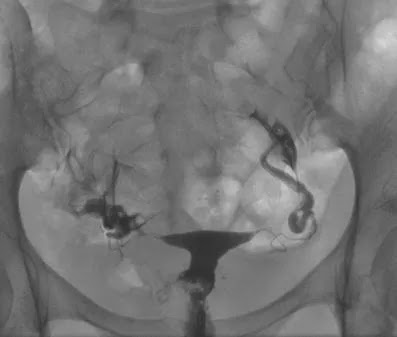
No immediate, i.e., allergy to the iodinated contrast agent or propfol, or delayed, i.e., pelvic infections, complications were observed during or following any of the 411 examinations. Of the 411 HSG examinations, 226 (55 %) were normal. In 15 of the examinations that were assessed as normal, administration of Buscopan® was required to differentiate spastic tubal occlusion from true tubal occlusion. There were minor abnormalities observed in 94 examinations (23 %). Five examinations (1.2 %) were not diagnostic (early termination of the exam due to venous filling of the uterine plexus). 

In 86 (21 %) of the examinations, at least one pathology was described that was probably or possibly relevant to female infertility (Table 1). The detailed analysis of our study was based on this subpopulation. There was a statistically significant age difference between patients with normal (mean 31.8 years) and pathological (mean 34.1 years) HSG examinations (P-value = 0.0001).

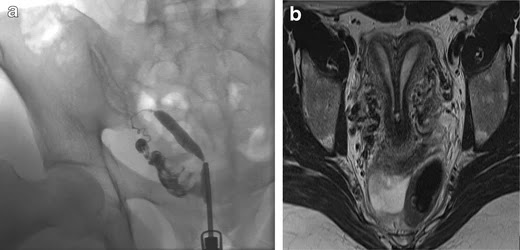
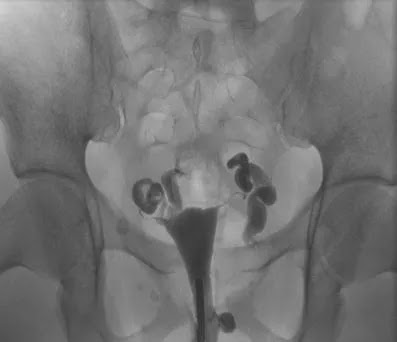
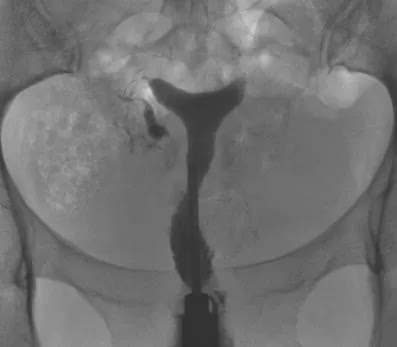
Of these 86 patients, 30 solely uterine pathologies were identified. The most common uterine pathologies were filling defects (n = 15, Figs. 2 and 3) and Müllerian duct anomalies (n = 11), including arcuate uterus, hypoplastic uterus, uterus septus (Fig. 4) and uterus bicornis bicollis (Fig. 5a and b). A few patients (n = 4) had minor abnormalities of the uterine cavity that were described as likely originating from mucosal irregularities (Table 1).
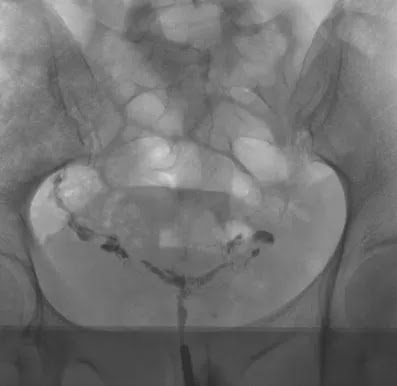
Additionally, 29 laparoscopies (LSC) and 19 hysteroscopies (HSC) were performed on 34 different patients. Three additional pathologies of the uterine cavity (2 small polyps and a single myoma) were identified that were not visible in the HSG. Nine of the 23 one- or two-sided proximal tubal occlusions diagnosed by HSG were normal at laparoscopy, resulting in a false-positive value of 39 %. On the contrary, HSG showed a high negative predictive value (100 %): No additional tube pathologies were identified at LSC if the tube morphology was normal at HSG. In the nine patients mentioned above, LSC (n = 5) and HSC (n = 4) were combined with an intervention (tuboneostomy, myoma resection or one-sided salpingectomy).

A very common procedure following a pathological HSG was insemination because of male subfertility. This procedure was performed as long as one of the fallopian tubes was described as normal and the uterine cavity had no major pathology.

In total, there were 27 pregnancies in 25 of the 86 patients (including 20 patients lost to follow-up, see below) with a pathological condition at HSG. These pregnancies resulted in the birth of 19 healthy children and 8 miscarriages.


Seventeen of the 25 patients only bore a healthy child. These 17 patients had the following HSG results: one-sided tubal occlusion (n = 6), adhesions (n = 4, one of these with uterus arcuatus), filling defects (n = 5), tubal irregularities, possibly postinfectious (n = 1) and sactosalpinx (n = 1). 

Two of the 25 women had miscarriages followed by successful pregnancies. Both of these patients showed filling defects, and one patient had additional tube irregularities, which were possibly postinfectious.
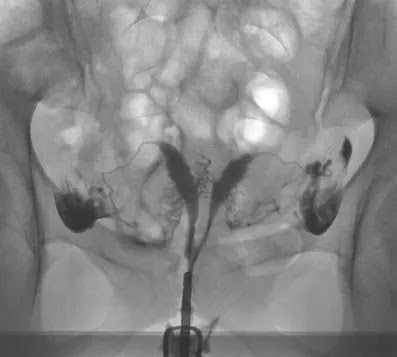

Six of the 25 patients had pregnancies that resulted in spontanteous abortions. In these six patients, the HSG showed one-sided tubary occlusion (n = 2), two-sided tubal occlusion (n = 2), adhesions (n = 1) and an arcuate uterus (n = 1).   

Results of further diagnostic workupEleven of the 86 patients had no further diagnostic workups. Three of the 86 patients had diagnostic workups following HSG without surgical procedures or further pathologies identified. 

Six of the 86 patients that solely had an miscarriage as the outcome showed the following conditions:   

  • Two-sided tubal occlusion, normal LSC and HSC. Pregnancy after insemination (n = 1).
  • One-sided tubal occlusion confirmed at LSC (n = 2), ½ with endometriosis at HSC.
  • Two-sided tubal occlusion, fundus myoma at HSC not visible at HSG (n = 1).
  • Two-sided tubal occlusion, abortion after ovum donation (n = 1). This patient had no LSC because of her relatively high age.
  • Uterus arcuatus (ovarian insufficiency) (n = 1).

One of the 86 patients had a miscarriage that was followed by a successful pregnancy. In this patient, the HSG showed a cavity abnormality due to adenomyosis/synechiae. The HSC diagnosis showed multiple scars. An additional myoma that was not visible at HSG was resected (Fig. 3).
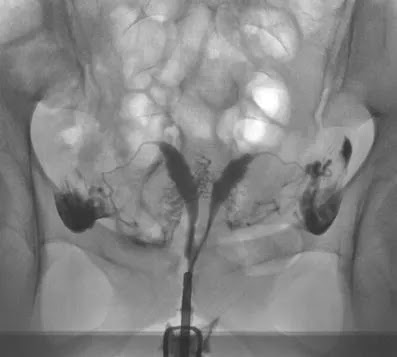
Four of the 86 patients had resection of a myoma (n = 3) or a polyp (n = 1) prior to becoming pregnant. Three of these HSG examinations identified filling defects, and one was not visible. One of these four patients had a spontaneous abortion prior to a normal birth. The other three patients gave birth to healthy children.


Forty-one of the 86 patients had no further treatment and no pregnancies. Two of these patients had no wish for further children; the examination was performed to assess the need for anticonception.

For 20 of the 86 (23 %) patients, follow-up information was unavailable. Approximately half of these patients were referred from outside institutions for HSG examinations only, and the remainder were drop-outs from the fertility program.

In our fertility center, HSG is still the most common first-line diagnostic test to evaluate the uterine cavity and tubal patency. HSG is relatively easy to perform and can be completed as an outpatient procedure. Using a good anesthetic protocol with propofol sedation, the procedure is well tolerated by patients. Whereas the administration of Propofol obviously increases patient comfort, the procedure is performed without any sedation in many other institutions, and the advantages should be discussed in light of the additional costs.
As recommended by the ESHRE guidelines [11], we excluded other infertility causes, such as male or ovarian factors, before performing a tubal patency test. According to the ESHRE guidelines, a first-line laparoscopy/hysteroscopy should be performed when tubal, uterine or pelvic pathologies are suspected or detected by TVUS.

In recent years, CAT has become an important screening test that can be used to decide upon further examinations [10]. Hysterosalpingo contrast sonography (HyCoSy) has become an important tool for the diagnosis of uterine or tubal pathologies [12]. According to the literature, this technique has a higher sensitivity than HSG (0.80 versus 0.53) [13], and the specificity (0.84 versus 0.87) is similar for both exams [14].


In our opinion, HyCoSy is more demanding for the examiner than HSG, it is better for assessing the uterine cavity than the fallopian tubes , and it has a longer learning curve. The advantages of hysterosalpingo contrast sonography are that it costs less and causes less pain; therefore, no anesthesia is necessary. Additionally, there is no exposure to radiation.


Whereas HyCoSy and HSG only have diagnostic value, laparoscopy and hysteroscopy also have therapeutic options, including adhesiolysis, excision of endometriotic lesions or resection of intrauterine polyps.


Considering that HSG is far more expensive and invasive (i.e., anesthesia, exposure to radiation) than HyCoSy, our aim is to avoid unnecessary HSG exams. Since 2009, we have routinely used CAT screening to select patients for laparoscopy/hysteroscopy as the first-line exam, and we have set an age limit of 38 years, above which we perform HyCoSy instead of HSG.
During the years of our retrospective study from 2006 to 2010, we chose the diagnostic procedure according to the criteria shown in Table 2. One of the aims of our retrospective study was to improve our decision-making and to avoid unnecessary exams. Of the 411 analysed HSGs, 86 (21 %) demonstrated at least one pathology described as potentially relevant for fertility. This is quite a low detection rate, meaning that we performed four of five HSG procedures in vain. This clearly indicates that the indication for HSG at our institution in recent years was too broad. Furthermore, there was a high false-positive rate for proximal tubal occlusion (39 %) and a high pregnancy rate in patients with pathological HSG, i.e., 25/86 of the total patients and 25/66 of the patients with follow-up.

We acknowledge some limitations to our study. First, the retrospective study design might appear to be a limitation of this study; however, all of the images from the examinations had been archived in our PACS, and all pathological cases were re-evaluated. No follow-up information was available for 23 % of the patients with a pathological condition at HSG. It is not known how many of these patients became pregnant. Dropout rates have been reported in the literature to be as high as 50 % before the beginning of therapy. It is likely that patients interrupt their fertility care because of emotional distress and poor prognoses [15]. Furthermore, some follow-ups were not available in our study for patients sent to our center only for tubal assessments by their gynaecologists or family doctors.
Another limitation is that laparoscopic and/or hysteroscopic results were available in only 29 of 411 HSG patients. This means that there was no information about possibly false-negative exams in the patients with normal HSG exams. From the 86 HSG exams with suspected pathologies, 29 patients had laparoscopy/hysteroscopy, and 20 patients were lost to follow-up. Therefore, it is not known how many of these patients became pregnant.

In conclusion, HSG is a safe, low cost and, with the application of propofol sedation, a well-tolerated procedure for tubal assessment, which should be performed at the end of the infertility investigation protocol. The relatively low percentage (21 %) of pathological exams in our population underlines the need for good patient preselection. The high false-positive rate for proximal tubal occlusion (39 %), probably due to tubal spasm, demonstrates the importance of antiperistaltic agents and delayed imaging. Furthermore, we observed a high pregnancy rate (in patients with pathological HSG). Most cases of pregnancy were spontaneous without tubal or uterine surgery. This could mean that the indication for HSG was too broad or that there could even be a therapeutic effect of the HSG procedure, i.e., improved patency of the fallopian tube because of the flushing during the examination [16]. As a result of this data analysis and literature review, the workflow in our own center will be adapted. We will establish hysterosalpingo-contrast sonography (HyCoSy) as a first-line exam for tubal and uterine factors, and improve the patient selection for primary laparoscopy/hysteroscopy using routine screening for CAT.

Source – https://insightsimaging.springeropen.com/articles/10.1007/s13244-012-0183-y

Mohak Infertility Center is one of the Best Infertility treatment centre in indore. Dr Shilpa Bhandari  – IVF specialist in Indore uses high medical techniques for investigation and counsels the patients. Book an appointment Today Call now 7898047572 For more information, visit – https://www.mohakivf.com

Please go through our social media :

like our page to no more about ivf


Facebook :  https://www.facebook.com/MOHAK-IVF-1167147806785287/

Please do follow on Instagram

Instagram : https://www.instagram.com/mohak_ivf/

To More Post: Coverage of infertility treatment and fertility outcomes
Coverage of infertility treatment and fertility outcomes
Introduction

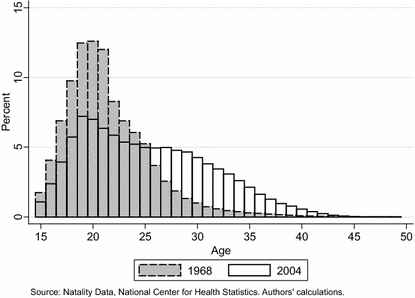
The average age at first birth in the United States has been rising steadily over the past decades, from 21.49 in 1968 to 23.72 in 1985 and 25.26 in 2004. As shown in Fig. 1, this increase has been accompanied by remarkable changes in the age distribution of first-time mothers, which has become less skewed with a substantially higher density of first-time mothers older than 25 and an extension of first-time motherhood beyond the age of 40.

Women, however, face a biological time constraint on bearing children because fecundity decreases with age. The introduction of and the subsequent increase in the use of assisted reproductive therapies (ARTs) have helped women in extending their reproductive lives (CDC 2007). ARTs, particularly in-vitro fertilisation (IVF), are very expensive procedures. For example, in 1992, a birth from an IVF procedure cost between 44,000 and 211,942 USD (Neumann et al. 1994). Over time, however, ART patients have faced substantially lower costs due to increased competition (Hamilton and McManus 2012), a reduced number of cycles due to better technology,1   ,  2 and most importantly, the availability of insurance in both the United States and in Europe.3 In this paper, we analyse whether easier access to ARTs induces women to delay motherhood and whether, in the long term, it affects women’s completed fertility by the end of their reproductive lives.

The perception that ARTs increase fertility has led the European Parliament to call on member states to insure ‘the right to universal access to infertility treatment’ (Ziebe and Devroey 2008). This movement’s incarnation in the United States has sponsored several attempts at approving the ‘Family Building Act of 2009’, which would extend coverage for infertility treatments, and the enactment by several states of infertility insurance coverage laws, which are referred to as infertility treatment mandates.4 Considering the high cost of infertility treatments (Bitler and Schmidt 2012; Collins 2001), policy interventions that grant insurance coverage for infertility treatments may affect fertility trends and ultimately, population age structures. The mid- to long-term consequences of ARTs are central to the European debate on possible solutions to an ageing population—i.e., can ARTs be part of a package of policies intended to increase fertility rates in Europe? (Grant et al. 2006; Ziebe and Devroey 2008).5

The answer is complex because the short-term effect of an increase in coverage for infertility treatments may be very different from the long-term effect. In the short term, an increase in the aggregate fertility rate is expected due to an increase in fertility amongst the least fertile women (a compositional effect). Typically, these are relatively old women who delayed motherhood and would be unlikely to conceive otherwise (Buckles 2005; Schmidt 2005a, 2007). Moreover, increased access to ARTs increases the frequency of multiple births in the population (Bundorf et al. 2007). These two effects are short-term and non-strategic and may be referred to as ex-post moral hazard. In the long term, however, easier access to infertility treatments and the possibility of extending reproductive life may induce women to further delay motherhood, possibly because of overly optimistic perceptions about the effectiveness of infertility treatments (Lampi 2006; Benyamini 2003). This response by relatively young women, which may be referred to as ex-ante moral hazard, is strategic and would increase the average age at first birth for several years after the policy was implemented.6 Such a response would be consistent, for example, with the delay in marriage due to increased infertility coverage documented in Abramowitz (2014). Therefore, it is possible that an increase in insurance coverage for infertility treatment may have negative effects on total fertility in the mid- to long-term. This paper examines these issues in the United States, where, by 2001, more than 1 % of live births were due to IVF (CDC 2007).

Our objective in this paper is twofold. First, we analyse the impact of an increase in infertility insurance on the timing of first births. Although this question was first explored by Buckles (2005), we believe that our paper contributes in a substantial way to the few existing manuscripts that address this topic by using more adequate data and methodology. Moreover, we go a step further by looking into the long term effects of increasing infertility insurance. Second, we ask whether the increase in infertility insurance affects completed fertility, i.e., fertility by the end of a woman’s reproductive life. This study represents, to the best of our knowledge, the first to address this issue.7 Both objectives are analysed using data from the United States.

To assess whether infertility insurance induces a delay in motherhood, one needs to combine evidence about reduced fertility of young women with information on when women become mothers, i.e., when (if at all) they stop delaying motherhood. This precisely describes the approach we adopt in the first part of this paper; we not only offer similar evidence as Buckles (2005) on the reduced probability that relatively young women in mandated states have children, but we also demonstrate that the average age of first-time mothers continues to increase in the medium to long term after the enactments of infertility mandates.8 Our long-term estimate (10–16 years after the first and the last mandates were passed) ranges from 3 to 5 months. These effects are substantial insofar as they represent between 15.7 and 18.8 % of the total increase in the age of first-time mothers during the period considered for the group of six states that enacted infertility treatment mandates9 and between 24.8 and 34.3 % for the three states with the most generous coverage (Illinois, Massachusetts, and Rhode-Island).10

The ageing of first-time mothers may impact women’s completed fertility in the long term. Hence, our second goal is to determine whether infertility insurance indeed increases women’s completed fertility by the end of their reproductive lives, a question that has not been addressed in the existing literature. In principle, any potential negative effects on fertility induced by a delay of motherhood may eventually be offset by a higher prevalence of multiple births,11 so the impact of infertility insurance on completed fertility is ultimately an empirical question. Overall, our estimates, based on data on the number of biological children from the June CPS, show no statistically significant effect of either the strong or the comprehensive mandates on completed fertility.

In sum, our paper shows that, despite being associated with higher birth rates among relatively older women and with a higher prevalence of multiple births, infertility insurance does not have a statistically significant effect on women’s fertility at the end of their reproductive lives. The reason lies, as we further show, in the fact that infertility insurance mandates also appear to delay motherhood among relatively younger women and, hence, make conception more difficult because fecundity decreases with age.

The rest of the paper is structured as follows: Sect. 2 describes the characteristics of infertility treatment mandates including where and when they were enacted; Sect. 3 describes the data sources used in this paper; Sect. 4 presents our evidence on the delay of motherhood; Sect. 5 presents an analysis of the impact of the mandates on women’s completed fertility; Sect. 6 presents conclusions; Sect. 7 contains figures and tables; and Sect. 8 is the “Appendix”.

Source – https://link.springer.com/article/10.1007/s13209-015-0135-0

Mohak Infertility Center is one of the Best fertility hospital in india Mohak Infertility Center believe everyone has right to become parents whether he/she is not able to conceive naturally and that’s why we have achieved comparatively high pregnancy rate. Our dedicated and whole hearted efforts make this believe real for various infertile couples. We offer all IVF Treatment under one roof like ICSI-IVF India, IUI, Male/Female Infertility, test tube baby treatment and infertility treatment in indore India. Book an appointment Today Call now 7898047572 For more information, visit – https://www.mohakivf.com

Please go through our social media :


like our page to no more about ivf

Facebook :  https://www.facebook.com/MOHAK-IVF-1167147806785287/

Please do follow on Instagram


Instagram : https://www.instagram.com/mohak_ivf/

To More Post: The hysteroscopic view of infertility: the mid-secretory endometrium and treatment success towards pregnancy


Best infertility hospital in indore | Test tube baby center in indore

IVF per se is not the indication of cesarian delivery. But the rate of cesarian is higher in patients who have gotten pregnant via IVF. The reasons are
– higher age of mother
– associated complicating factors like obesity, fibroids , diabetes etc
– multiple pregnancies
– preterm deliveries

At the end of the day route of delivery depends on factors of patient and pregnancy not on how the baby was conceived.

Get the answer of all your queries regarding IVF from our fertility specialist.
To book an appointment Call 78980–47572 / 80852–77666 or For more detail visit www.mohakivf.com

Are you looking for the Best Fertility hospital in India? Mohak Infertility Center is one of the leading Best Fertility hospitals and Test tube baby center in indore Mohak Infertility Center is a IVF center in Indore Madhya Pradesh with an excellent and experienced team of IVF specialist and embryologists, who are able to offer you today’s most advanced and effective procedures in IVF treatment. Our IVF Specialists and embryologists have been trained and have worked in some of the Best IVF Centers of the world, Mohak Infertility Center in Indore aims to give you the best chance of having a healthy baby. Our team of IVF specialist and support staff is committed to provide you the best possible care and advise that you can trust. Book an appointment Today Call now 7898047572 For more information, visit - https://www.mohakivf.com

Best infertility hospital in indore, ivf specialist in indore, ivf center in indore, test tube baby center in indore, ivf treatment cost in indore, Best centre for IVF in indore, affordable ivf cost in indore, best fertility hospital in india, best ivf center in mp, infertility treatment in indore, best ivf centre in india, ICSI treatment in indore

Best IVFcenter in MP | Infertility treatment in Indore

IVF does not cause twin pregnancies especially if selected single embryo transfer is done. However many centres choose to do multiple embryo transfers increasing the chances of twin or higher order pregnancies.

Get the answer of all your queries regarding IVF from our fertility specialist.
To book an appointment Call 78980–47572 / 80852–77666 or For more detail visit www.mohakivf.com

Infertility treatment in indore, Best infertility hospital in indore, ivf specialist in indore, ivf center in indore, ivf treatment cost in indore, test tube baby center in indore, Best centre for IVF in indore, affordable ivf cost in indore, best fertility hospital in india, best ivf center in mp, best ivf centre in india, ICSI treatment in indore

IVF treatment cost in Indore | affordable IVF cost in Indore | Mohak Infertility Center

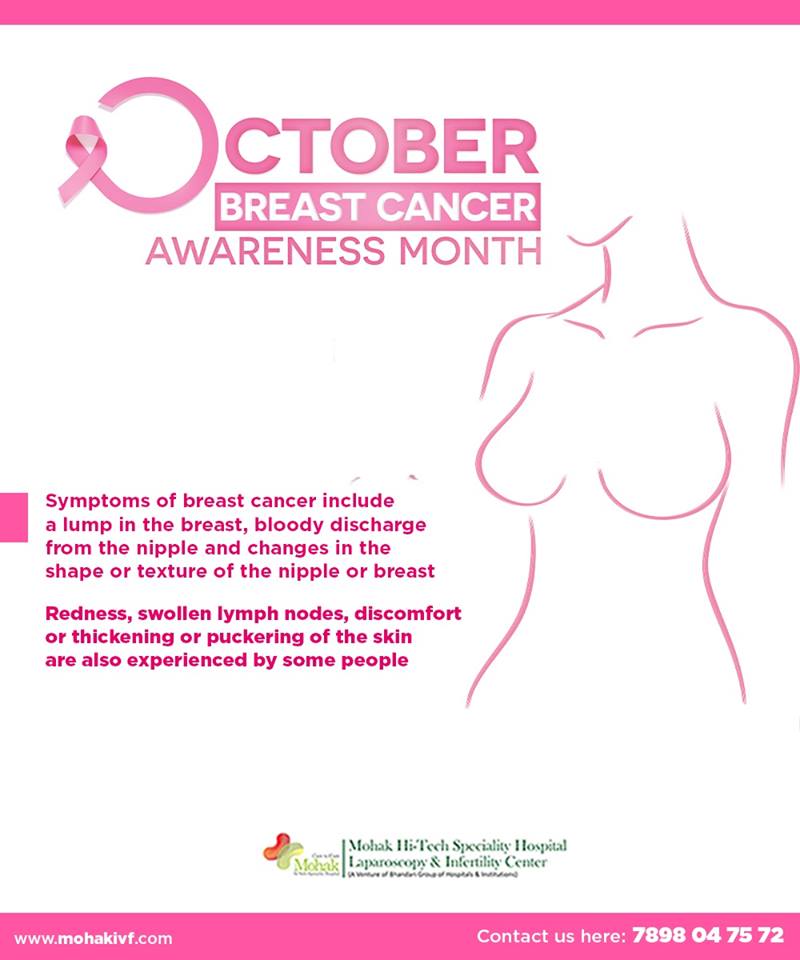
Symptoms of breast cancer include a lump in the breast, bloody discharge from the nipple and changes in the shape or texture of the nipple or breast.
Redness, swollen lymph nodes, discomfort or thickening or puckering of the skin are also experienced by some people.

With #early #detection and #treatment, breast cancer can increasingly be treated successfully.

Get the answer of all your queries regarding IVF from our fertility specialist.
To book an appointment Call 78980–47572 / 80852–77666 or For more detail visit www.mohakivf.com


Mohak Infertility Center is a world-class IVF center in indore with the objective to provide “Affordable and Advanced” IVF treatment. With a strong belief in Compassion, Accountability & Transparency, Mohak Infertility Center strives to offer end to end IVF Treatment under 1 roof. Book an appointment Today Call now 7898047572 For more information, visit - https://www.mohakivf.com

Best infertility hospital in indore, ivf specialist in indore, ivf center in indore, test tube baby center in indore, ivf treatment cost in indore, Best centre for IVF in indore, affordable ivf cost in indore, best fertility hospital in india, best ivf center in mp, infertility treatment in indorebest ivf centre in india, ICSI treatment in indore

The hysteroscopic view of infertility: the mid-secretory endometrium and treatment success towards pregnancy

Abstract

The purpose of this study was the analysis of a correlation, in infertile patients, between the quality of the endometrium based on its vascularisation and the chances of conception. Hysteroscopy was carried out to determine the quality of the endometrial surface using the Sakumoto–Masamoto classification (“good” vs. “poor” endometrium) in the secretory phase of the menstrual cycle. The results were set in relation to the outcome of the subsequent infertility treatment, i.e. the establishment of a pregnancy within the study period (4 years). In 108 (67%) of the 162 followed-up patients, the endometrium was endoscopically classified as “good”, while in 54 (33%) the result was “poor”. The overall pregnancy rate was 37% (60 patients); 47 of all pregnancies (78%) occurred in women with a “good” endometrium while 13 (22%) had a “poor” classification. This positive association between the establishment of a pregnancy in the follow-up and a “good” classification of the endometrial vasculature in the group with a “good” endometrium was significant (P = 0.0165, Fisher’s exact test). This study confirms the usefulness of endometrial evaluation by hysteroscopy as a diagnostic instrument for providing a prognosis of the chance for the patients to become pregnant.

Background


One of the most difficult questions put forward by patients after the failure of a fertility therapy such as in vitro fertilisation (IVF) and intra-cytoplasmic sperm injection (ICSI) is related to the lack of success. The implantation rate per transferred embryo normally does not exceed 30%. Often the failure of “embryo implantation” is given as an explanation as the failure in one of the most critical stages at the beginning of conception, i.e. when apposition and implantation has to occur inside the uterine cavity. Current knowledge about the mechanism of these interactions is still difficult to interpret [1].

Various different suggestions have been made for investigating these mechanisms and attempting to understand which would be the characteristic elements of the endometrium that ensure ideal conditions for the embryo; but they have until today been limited to the so-called theory of the endometrial “opportunity window” [2] and did not offer effective clinical instruments for understanding which groups of patients would be at an increased risk of embryo implantation failure [3]. By using hysteroscopy as a diagnostic procedure for the assessment of pathologies inside the uterine cavity, it has, however, been shown that the differential characterisation of the endometrial surface could be a helpful tool for evaluating the in vivo vascularisation of the uterine mucosa. Already, Sakumoto et al. in 1992 in the first place [4], and after him Masamoto et al. in 2000 [5], have described the technique and used this differentiation in order to demonstrate that the endometrium could be classified into two distinct groups: a “good” endometrium, which has circular gland openings and an intense vascular ramification on one hand, and a “poor” endometrium, which is characterised by a surface with a lower gland and vascular density on the other.

The purpose of this study was to demonstrate the impact of the hysteroscopy, according to this vascularisation-based staging, and to investigate whether this endometrium quality could be used as a tool to assess the potential to achieve a pregnancy irrespective of the chosen type of infertility treatment.

Materials and methods


All infertile patients attending our fertility centre and with a regular menstrual cycle were asked to participate in this comparative, prospective study. They underwent a pre-operative transvaginal sonography (TVS), a full hormonal assessment (FSH, LH, 17β-estradiol, thyroid-stimulating hormone and prolactin) in the serum on cycle days 3 to 5 and then a hysteroscopy in the second part of the menstrual cycle for evaluating the vascularisation of the endometrium. Informed, written consent was obtained from the patients after explanation of the study by the clinician prior to the procedure, and they were asked to avoid a pregnancy in the examination cycle. The study protocol was approved by the local ethical committee.

The inclusion criteria were infertility (absence of conception after 12 months of regular, unprotected intercourse), age less than 43 years, regular cycles (25–31 days) and normal hormonal values (including FSH <12 mU/mL) had to be fulfilled. All partners provided a spermiogram for the exclusion of male factor infertility. Further exclusion criteria were known causes of uterine malformations, endometrial adhesions and hormonal therapy such as oral contraceptives or other oestrogen–progesterone medications within the last 3 months before hysteroscopy. If necessary, the procedure was combined with a laparoscopy to test the tubal patency, and the hysteroscopy was done in most cases during the same operating session and under general anaesthesia. The ultrasonographers were located in the same university department, but not involved in the surgical procedure, and the surgeon was blinded to the TVS findings.

The endometrial surface was evaluated according to the Sakumoto–Masamoto grading (“good” vs. “poor”). Endoscopic findings were categorised as “good” with an appearance representing ring-type glandular openings and maximal glandular secretion or “poor” with a low development level of vessel networks on the endometrial surface. This is illustrated in Fig.1. Hysteroscopic procedures were carried out when indicated (e.g. polyps, myomas, adhesions, septa). The diagnostic hysteroscopy was performed with a 5-mm-outer diameter scope (30°, Karl Storz) connected to a standard endoscopic camera, and a saline solution at low pressure (not higher than 60 mmHg) was used for the distension of the uterine cavity. Hysteroscopic findings were observed and analysed by three gynaecologists using videotape records.

The follow-up interval lasted for 12 months from hysteroscopy. Data were recorded and analysed for a correlation between the vascularisation score of the endometrium and the occurrence of embryo implantation (spontaneous pregnancy, successful outcome after hormonal stimulation with or without intrauterine insemination or successful IVF/ICSI-embryo transfer treatment). For statistical evaluation, the Fisher’s exact test was applied using GraphPad Prism Software (San Diego, USA). For alpha, we considered 0.05 as cutoff value to avoid type I error.

Findings


A total of 178 infertile women underwent a hysteroscopic assessment, and 162 (91%) of them could be followed up in our hospital. A “good” endometrium according to Sakumoto–Masamoto staging was diagnosed in 108 of them (67%), while 54 (33%) patients were graded as “poor”. No differences in the distribution pattern of the causes and duration of infertility, the age of the patients (mean 33.8 years in the “good” and 33.6 in the “poor” group) or the pre-treatment day 3 serum level of follicle-stimulating hormone (6.8 and 7.4 U/L) were observed between these two groups.

A normal uterine cavity was reported in 133 (83%) women, while endometrial polyps, submucosal fibroids, adhesions or uterine malformations were found in 29 cases (17%). On the other hand, the pre-operative TVS indicated intrauterine pathologies in 15 cases (9.3%). The overall pregnancy rate was 37% (60 women); 15 women became pregnant spontaneously, 22 patients succeeded after follicular stimulation with recombinant gonadotropins (rFSH) and 23 after treatment with in vitro fertilisation and embryo transfer including ICSI.

In the total pregnancy group (N = 60), a “good” endometrium was found in 47 women (78%) while this was the case in 61 patients (60%) of the group who did not achieve a pregnancy. Forty-one patients with a “poor” endometrium did not succeed in getting pregnant. Only 13 patients with a “poor” endometrium did succeed in establishing pregnancy in the follow-up. The association between endometrium quality by Sakumoto–Masamoto classification and pregnancy outcome was statistically significant (P = 0.0165, OR = 2.43, CI = 1.17–5.05); the contingency matrix for the pregnancy outcome is shown in Table 1.

Conclusion

Our results confirm those of the studies carried out by Sakumoto and Masamoto [4, 5], indicating that a hysteroscopic examination of the mid-secretory endometrium can be a reliable instrument for determining the chances of a patient to become pregnant. The classification in “good” and “poor” is leading to the conclusion that a poorly vascularised endometrium with limited glandular (secretory) structures may result in a tissue which is not suitable for a correct embryo implantation and endometrial development, and this irrespective of other factors of sterility.

Nevertheless, our results showed a lower fraction of patients (one third) with a “poor” endometrium in comparison to earlier studies (45.9% in the study of Sakumoto [4] and 61.3% in Masamoto et al. [5]): we believe that this difference can be explained with a different patient selection in the study groups. As a matter of fact, we did not focus on patients with a history of repeated abortions as it was the case in the study of Masamoto [5], but on a global infertile population.

Another clearly interesting but only partially surprising finding is the high percentage (17.2%) of intrauterine pathologies that have been diagnosed in the hysteroscopic examination when compared to the total number of patients with suspected intracavitary problems found in the pre-operative sonography (9.3% of all women, and this in spite of all ultrasound examinations having been carried out by the same team of experienced gynaecologists). These results, nevertheless, are in large agreement with previously published studies [6, 7].

We therefore conclude that a hysteroscopic examination, particularly in cases of idiopathic infertility or after several unsuccessful treatment cycles with in vitro fertilisation [8], is strongly indicated [9] and has the added benefit of providing a prognostic measure for determining the chances of the patient to become pregnant, in the future, in addition to its diagnostic significance [10].

Source – https://gynecolsurg.springeropen.com/articles/10.1007/s10397-011-0687-3

Are you looking for the Best IVF specialist in indore? Dr Shilpa Bhandari is one of the first reproductive medicine specialist of this country. She has not only been a pioneering force in the development of an MCI recognized DM/ McH reproductive medicine curriculum, but has also procured this prestigious super specialization by 3 years of extensive training in this field.

She looks after the needs of more than a thousand patients annually in terms of consultation, surgeries, IVF, medical treatment, etc. she has also been actively involved in training other doctors as well as research. She has authored more than 20 research papers in national and international journals. Dr Shilpa Bhandari is an ardent believer in open patient communication, maintaining and honest doctor patient relationship and patient empowerment. Her dream is to provide affordable, honest patient care to couple seeking to enhance their families. Book an appointment Today Call now 7898047572 For more information, visit – https://www.mohakivf.com

Please go through our social media :


like our page to no more about ivf


Facebook :  https://www.facebook.com/MOHAK-IVF-1167147806785287/


Please do follow on Instagram


Instagram : https://www.instagram.com/mohak_ivf/

To More Post: Complex one-stop investigation of infertility: transvaginal hydrolaparoscopy


IVF specialist in Indore | Best centre for IVF in Indore

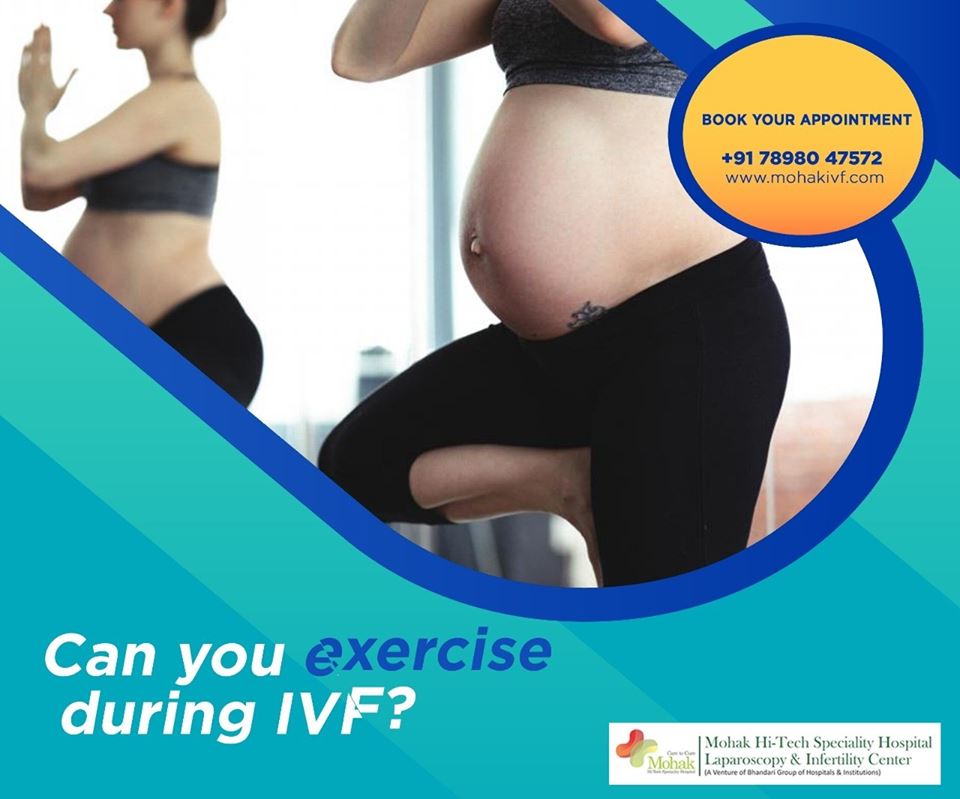
There is no reason for a complete restriction on physical activity during IVF. For many women, exercise is a stress relief strategy. Undergoing IVF is a naturally stressful process, and it is important to use all of your resources to reduce anxiety and tension. However, you should keep your exercise routine to a low-impact maximum during the cycle. While mild to moderate exercise is acceptable during IVF treatment, patients should be careful about what types of exercises they perform. Focus on low-impact exercises that encourage stress relief.

It’s also important to drink plenty of water before, during and after a workout, and to eat a healthy and well-balanced diet to keep your energy up. Above all, remember: Taking care of your body should be your top priority during your IVF cycle.

Get the answer of all your queries regarding IVF from our fertility specialist.
To book an appointment Call 78980–47572 / 80852–77666 or For more detail visit www.mohakivf.com

Mohak Infertility Center is a world-class IVF center in indore with the objective to provide “Affordable and Advanced” IVF treatment. With a strong belief in Compassion, Accountability & Transparency, Mohak Infertility Center strives to offer end to end IVF Treatment under 1 roof. Book an appointment Today Call now 7898047572 For more information, visit - https://www.mohakivf.com

Best infertility hospital in indore, ivf specialist in indore, ivf center in indore, test tube baby center in indore, ivf treatment cost in indore, Best centre for IVF in indore, affordable ivf cost in indore, best fertility hospital in india, best ivf center in mp, infertility treatment in indore, best ivf centre in india, ICSI treatment in indore

Best IVF centre in India | Infertility treatment in Indore

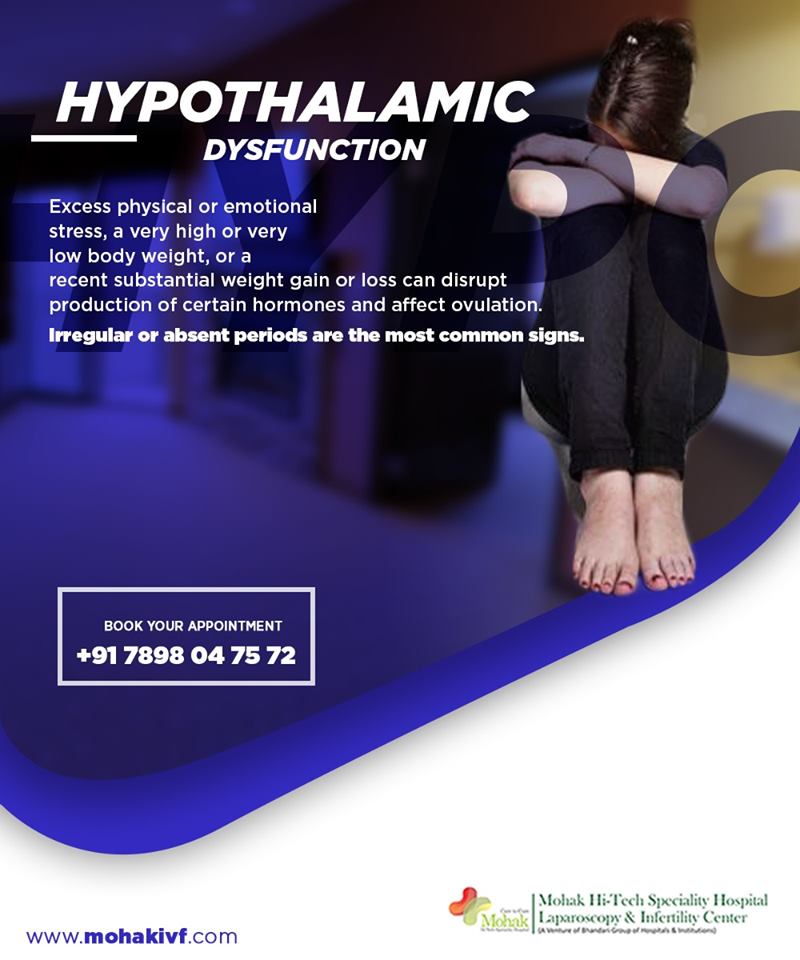
Hypothalamic Dysfunction
Excess Physical or emotional stress, a very high or a recent substantial weight gain or loss can disrupt production of certain hormones and affect ovulation.

Get the answer of all your queries regarding IVF from our fertility specialist.
To book an appointment Call 78980–47572 / 80852–77666 or For more detail visit www.mohakivf.com

IVF treatment cost in indore, ivf center in indore, Best infertility hospital in indore, affordable ivf cost in indore, test tube baby center in indore, Best centre for IVF in indore, IVF specialist in indore, best fertility hospital in india, best ivf center in mp,ICSI treatment in indore, best ivf centre in indiainfertility treatment in indore

Complex one-stop investigation of infertility: transvaginal hydrolaparoscopy

Abstract

One of the intensively discussed topics recently is investigation of infertile patients. A subject of particular interest is a new technique – transvaginal hydrolaparoscopy (TVHL), which has already found its place amongst other methods of infertility exploration. Transvaginal hydrolaparoscopy allows atraumatic investigation of reproductive organs in physiologic conditions, in ambulatory settings. Significant, for clinical practice, is the possibility of a combination of transvaginal hydrolaparoscopy with other methods of investigation – sonohysterosalpinogography, hysteroscopy and salpingoscopy, which make possible integrated exploration of the reproductive system. Instillation of saline into the pelvic cavity through uterine tubes (or through puncture needle if needed) under ultrasonographic control and exposition of posterior fornix, allows better orientation in the pouch of Douglas, complex assessment of reproductive organs and determination of advisability of pelvioscopy – the relatively invasive technique as well as thorough control of the safe access to the pouch of Douglas.

Since Gordts et al. in 1998 have introduced the technique of transvaginal hydrolaparoscopy (TVHL), for the investigation of infertile women [1], interest to the vaginal route of genital tract exploration has been recommenced.

Introduction of more global concept of fertiloscopy: concurrent performance of pelvioscopy, hysteroscopy, salpingoscopy and microsalpingoscopy with chromopertubation [2] allows for an increase in usefulness of infertility investigation and to optimize treatment strategy for infertility management with the consequent saving of time and costs. Introduction of this highly informative endoscopic technique into the format of one-stop investigation of infertility has become possible after the introduction of a new technique of atraumatic access to the pouch of Douglas via vaginal route using new instrumentations for transvaginal hydrolaparoscopy (TVHL) in the ambulatory settings [3, 4].

From April of 2002 till November of 2005 we have performed 837 fertiloscopies. As we described previously [5], TVHL with hysteroscopy and salpingoscopy is routinely performed in our clinic, in complex with sonohysterosalpingography and with extensive use of ultrasonographic control, in order to assess the future diagnostic insertion into the pouch of Douglas, as well as to ensure safety of this manipulation (instillation of warm saline for exposition of the posterior fornix of vagina).

The most difficult stage of TVHL is the introduction of instruments through the posterior fornix of the vagina into the pouch of Douglas. According to the data of various authors, access to the pouch of Douglas failed in 4.3-0% cases [1–4, 6–15]. Complications are expected when the patient has a retroverted uterus or in the presence of ovaries, uterine tubes, leiomyoma, bowel loops or varicose veins in the pouch of Douglas. Some authors consider such disposition as a relative/absolute contraindication to the procedure [1, 3, 4, 7, 12, 14, 16]. According to the data, the bowel trauma took place in 0.65% of procedures, but after the initial experience it has reduced to 0.25[16]. In 50% of cases, bowel injury was estimated by the surgeon as avoidable. The development of safe techniques for insertion of instrument/s into the pelvic cavity, as well as determination of the capability and the necessity of performing pelvioscopy is highly important.

As a matter of fact, nowadays there are several, similar systems of instruments for the access to the pouch of Douglas which differ in construction of the puncture needle (combined needle-trocar system with adapted Veress needle, and separate needle and trocar system). All systems have their advantages and disadvantages, but discussion of these topics is not the aim of this article. We would like to introduce some safe methods which enable the avoidance of complications to a grater extent, and to specify the possibility and rationality (reasonableness) of the performance of TVHL.

During performance of procedures we use Transvaginal hydrolaparoscopic kit (Circon ACMI, Stamford, CT) or Transvaginal hydrolaparoscopy set (Karl Storz, Tuttlingen, Germany). Ultrasonographic investigation/assistance was performed using Aloca SSD 650 with transvaginal probe with a frequency of 5.5 MHz, equipped with the puncture set.

During the process of preparation for laparoscopic investigation, detailed ultrasonography is performed with particular attention to the location of uterine corpus, uterine cervix and vagina, also to the state of posterior fornix of the vagina and the contents of the pouch of Douglas.

The first stage of the investigation is routine hysteroscopy, after which the pouch of Douglas is partially filled with saline (if at least one of the uterine tubes is patent).

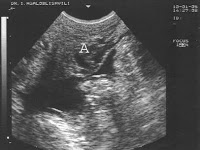
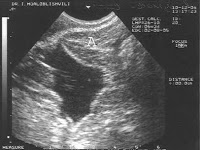
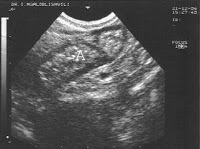
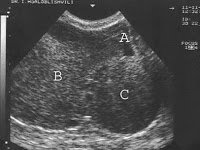
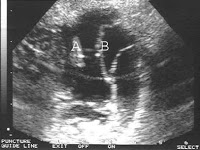
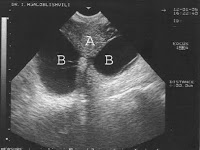
The second stage is the routine sonohysterosalpingography during which by transtubal instillation of 60–200 ml of saline into the pelvic cavity, exposition of the posterior fornix of vagina is reached, which makes it possible, against a background of instilled fluid, to clearly visualize and assess the fornix (Figs. 1, 2, 3 and 4 determine the presence, the location and the characteristics of adhesions in the pouch of Douglas, presence of dilated vessels and presenting organs in minor pelvis. (Figs. 5, 6, 7 and 8).

In the case of non-patency of uterine tubes, which makes the instillation of saline into the pelvic cavity impossible, transvaginal puncture set is used under the ultrasonographic control, to allow exposition of the posterior fornix by instillation of water via an aspiration needle Fig. 7. The presence of follicular fluid during ovulation sometimes is quite enough for ultrasonographic orientation in the situation.

The third stage of investigation is the transvaginal hydrolaparoscopy: an insertion of laparascopic instruments into the pelvic cavity is performed, if there have not been revealed contraindications or reasons of TVHL cancellation (for example hydrosalpinges-Fig. 8) at previous stages of investigation. These conditions are:

  • Complete obliteration of the pouch of Douglas Fig. 5.
  • Thickening of posterior fornix, often with uneven echo structure and width Fig. 2, with the visualized dilated vessels Fig. 3, sometimes with presence of retro cervical endometriosis or varicose veins, adipose structure behind the posterior fornix or vagina Fig. 4.
  • Intensive adhesions in the pouch of Douglas Fig. 7.
  • Localization of fixed organs of minor pelvis into the pouch of Douglas: one or both ovaries, uterine tube/s Fig. 8, intestinal loops Fig. 5, myomatous node or uterine corpus Fig. 6.
  • Bilateral hydrosalpinges Bilateral Fig. 8.

Among the investigated 837 infertile women, in 6 cases was detected suspicious pathology on atypical alterations, thus further stages of investigation were postponed until an appropriate differential diagnosis is obtained.

Results of the next stage, sonohysterosalpingography for the remaining 831 women are summarized in Table.

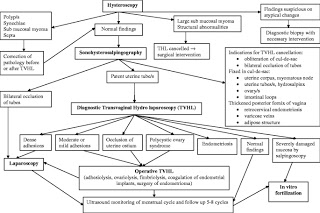
After the stages of hysteroscopy and sonohysterosalpingography, transvaginal hydrolaparoscopy was performed in 702 of the 837 women. An extent of exploration was determined during the procedure, after considering advisability and possible safety of conducting different interventions (Fig. 9 Algorithm of management). In 135 (16.1%) women out of 837 TVHL was cancelled or postponed. We have not noted any complications during performed investigations.


Hydrosalpinges of at least one of the tubes, does not represent contraindication for performing transvaginal hydrolaparoscopy per se (if it is not obliterating the pouch of Douglas), but often on the stage of sonohysterosalpingography/hystreoscopy the need for the transvaginal hydrolaparoscopy vanishes, as a treatment strategy of infertility becomes evident (Fig. 9 Algorithm of management). On the basis of already discovered findings it is possible to switch to the accepted interventions for infertility management. This includes either restoration of natural fertility – reconstructive surgery of the uterine tubes or creation of optimal conditions for IVF (proximal obstruction of tubes, salpingectomy etc) [17].

Ultrasonographic control during procedure of transvaginal hydrolaparoscopy not only allows an evaluation of the proximal parts of tubes which in complex increases informativeness of the investigation, but also gives a possibility to visualize existence of adhesions in the pouch of Douglas-together with the introduction of the trocar system. However it is not sufficient enough to assess the role of adhesions in infertility as this method is not able to access the fimbrial-ovarian area- a key functioning part of the reproductive tract.


Thus, we present the investigation of infertility which includes: hysteroscopy, sonohysterosalpingography with instillation of fluid into the pelvic cavity (if necessary via puncture needle) under ultrasonographic control, which provides exposition of the posterior fornix and orientation in the pouch of Douglas, hydropelvioscopy with dye chromopertubation and salpingoscopy. Such a format of investigation makes it possible for amore complex evaluation of reproductive system and determination of advisability of performance of transvaginal hydrolaparoscopy – a relatively invasive procedure with more intensive control of safety of the access to the pouch of Douglas.

Source – https://gynecolsurg.springeropen.com/articles/10.1007/s10397-006-0241-x

Are you looking for the Best Fertility hospital in India? Mohak Infertility Center is one of the leading Best Fertility hospitals and Test tube baby center in indore Mohak Infertility Center is a IVF center in Indore Madhya Pradesh with an excellent and experienced team of IVF specialist and embryologists, who are able to offer you today’s most advanced and effective procedures in IVF treatment. Our IVF Specialists and embryologists have been trained and have worked in some of the Best IVF Centers of the world, Mohak Infertility Center in Indore aims to give you the best chance of having a healthy baby. Our team of IVF specialist and support staff is committed to provide you the best possible care and advise that you can trust. Book an appointment Today Call now 7898047572 For more information, visit – https://www.mohakivf.com

Please go through our social media :

like our page to no more about ivf

Facebook :  https://www.facebook.com/MOHAK-IVF-1167147806785287/

Please do follow on Instagram

Instagram : https://www.instagram.com/mohak_ivf/

To More Post: Indications to tubal reconstructive surgery in the era of IVF


Best fertility hospital in india | Best centre for IVF in indore

Feeling Emotions and Overthinking — mental health playing important role in reproductive hormone regulation if we are stressed it may affect to conceive a baby.

Get the answer of all your queries regarding IVF from our fertility specialist.
To book an appointment Call 78980–47572 / 80852–77666 or For more detail visit www.mohakivf.com

Best infertility hospital in indore, ivf specialist in indore, ivf center in indore, test tube baby center in indore, ivf treatment cost in indore, Best centre for IVF in indore, affordable ivf cost in indore, Best fertility hospital in india, best ivf center in mp, infertility treatment in indore, best ivf centre in india, ICSI treatment in indore