
Most common causes of women infertility

In different communities, infertility is still considered as a major healthcare problem. Due to high prevalence, this issue has doubled its importance. A major proportion of infertility is the result of environmental conditions and also have risk factors.

What is female infertility?
The inability to produce offsprings by a woman is known as female infertility. It is found that at least half of all those couples who consult for infertility have the female partner with the “problem”. In older days, it was a common myth that is is always a woman partner with the inability and they have to bear the brunt of the blame. Only about 5% of total couples who were seeking help with producing a baby considered to be because of male infertility.

Listed below are some of the most common causes infertility found in women:

  1. Ovulation Disorders:

    To timely release, an egg from the ovary (ovulate), a very fine balance of a variety of hormones which includes estrogen, luteinizing hormone, progesterone, a follicle-stimulating hormone is needed. Due to the decrease in the levels of progesterone one can experience interference in the adhesion of the embryo with the uterine lining. With the result of this, the risk of miscarriage increases. A significant increase in the levels of estrogen is also related to infertility in women.

  • Ovarian Failure:

    It may be a result of the natural disorders (known as Turner’s Syndrome) or medical treatments for ovarian tumours. It can also occur as a result of chemotherapy and radiotherapy for the treatment of cancers and tumours in different parts of the body.

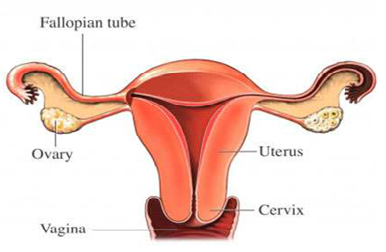
  • Endometriosis: When the uterine lining doesn’t form normally, this condition is referred to as Endometriosis. It blocks the fallopian tubes as it grows outside the reproductive tract. Almost 10% of infertile women are due to these blockages. Since there is adhesion between fallopian tubes, uterus and ovaries, the further movement of sperm gets blocked in advance cases of endometriosis. This, as a result, causes infertility. It is found from the studies that the eggs released by women having endometriosis have more chances of producing offsprings with genetic abnormalities in comparison to those not having the disease.
  • Uterine and Cervical Disorders: A woman can face problems in conception because of the Benign growths like the uterine wall which can interfere with its connection with the wall of the uterus.
  • Abnormalities in cervix shape:

    It makes the movement of sperm from the vagina to uterus through the vaginal tract to uterus really difficult because of the change in the texture of cervical mucus.

  • Age:

    A woman’s age is again an important factor which affects her fertility. With increasing age, the chances of conceiving get lowered in every woman. This is a fact

that every woman is born with a finite number of eggs which gradually goes down with getting older. Apart from this, the quality of eggs also declines with increasing eggs. It is seen that the eggs become more inclined towards chromosomal abnormalities. The increasing age also affects other reproductive functions of the body such as hormone levels and ovulation as a result of this, risk of miscarriage increases.

  • Polycystic Ovaries:

    Because of having multiple cysts, such ovaries are found to be abnormally large in size. Women having Polycystic Ovaries Syndrome (PCOS) generally can’t ovulate.

  • Immunological Disorders:

    The sperm gets destroyed by the cervical mucus when sometimes, it contains antibodies which detect sperm as a toxic foreign invader. When the immune cells of a woman attack normal cells of the body because of autoimmune diseases, this is also responsible for ovarian problems.

Since women infertility is a severe issue in most women, hence, the causes behind it are not limited. There are many other causes as well which can be a reason behind making a woman face difficulties while conceiving.

Mohak ivf is the best Infertility treatment Hospital in Indore with affordable ivf treatment to achieving pregnancy with world class facilities.You can get Infertility treatment by Best IVF specialists at Mohak Ivf centre in Indore.
For More Details : https://www.mohakivf.com
Common Myths and Facts related to IVF.

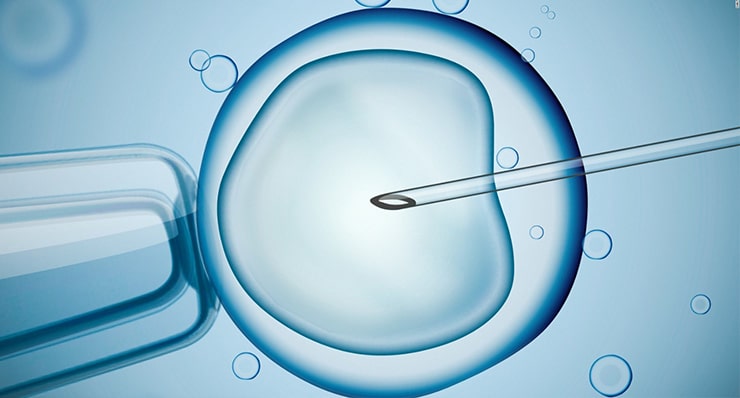
First of all, let’s know what exactly IVF is? Well, it is the method of fertilization which includes extraction of eggs, retrieving of sperm sample and thereafter manually combining egg and sperm together in the laboratory dish. The next process is the transfer of embryo(s) to the uterus. GIFT (Gamete intrafallopian transfer) and ZIFT (Zygote intrafallopian transfer) are some other forms of ART.

Today, we can find a lot of information and misinformation floating out there related to fertility treatments. In this situation, an individual trying to conceive can be bombarded with a lot of information from friends, family, relatives, and colleagues. Although their intentions are good, they can’t be any replacement for the qualified experts on fertility challenges. Mostly, they hold outdated and untrue information. This is the birth and way of spreading myths about IVF. The best advice we would give you to get an appointment and consult Fertility Specialist to discover why you’re facing issues while trying to conceive. We have come up with a set of common myths floating around Fertility Treatment and busted it for you.

Presenting to you, some of the common statements when you share your phase of struggle behind fertility with others. Let’s identify the myths and facts.

●     Some say that, if you go for an IVF Fertility treatment, you are more likely to have twins or triplets.

It’s nothing like that. This statement is baseless and doesn’t have any scientific justification. A successful cycle of IVF is aimed for a couple to achieve a singleton pregnancy to produce a healthy baby as a result. IVF technology has reached an advanced level which creates excellent quality embryos. There is only one embryo transferred normally but in rare circumstances, an embryo may divide in the womb after transfer and produce twin.

●     One can always conceive with the help of IVF treatment, no matter even if you wait until the early 40s

Again, this is a false statement. Unfortunately, human fertility declines with age. Though it’s not guaranteed, still IVF is a good option for women aged 35 and above.

●     The success rate of IVF Treatment is majorly influenced by your diet.

Yes, the statement is true. Your diet intake plays an important role in overall health and well being. Although there is no miracle food or magic diet which will guarantee the successful IVF. Whether you are trying naturally or using IVF technology, taking a varied, healthy diet and staying aside from junk food help you to conceive. Women are advised to take a routine folic acid supplement which helps them to conceive. In the case of men, they should take Vitamin E, Zinc and Selenium to improve their sperm quality.

●     An IVF treatment automatically leads to a high-risk pregnancy.

In most cases, it is found to have normal, healthy pregnancies in women who conceive with IVF. Whereas, women conceiving in their 40s may experience complicated pregnancy due to age-related risks in pregnancy.

●     Hormones taken for IVF will also make you moody and miserable.

Yes, sometimes. It is indeed a fact that hormones influence our mood, though it is very individual. A lady experiencing PMT are more likely to be irritable or feel down while going through the IVF process. During the treatment, work and lifestyle can also add pressure. However, any negative impact is rarely seen in women as a result of using hormones.

●     You will never be able to conceive unassisted after you conceive with IVF.

This is completely a false statement. Fertility is a result of many different factors. It doesn’t mean that a couple will never conceive unassisted if they are having difficulty in conceiving.

●     It’s possible for you to conceive naturally once you have one baby.

Again, a false statement. Fertility is no doubt complex. A specific medical problem can lead to face difficulty while conceiving. Sometimes, it can be unexplained. Until now we don’t have any evidence stating that IVF fertility treatment has resulted in making the couple more fertile in the long run.

●     Children born by IVF process possess birth problems and malfunctions as well.

A child born with abnormalities as a result of the IVF process is found rarely. Although chances of an anomalous fetus are unpredictable and even IVF children are like other normally born children.

Never get influenced by misinformation produced by people with good intentions. It is recommended to consult a qualified medical practitioner who can clarify your doubts on facts basis.

we at mohak ivf offer our patients widest range of infertility technology and our goal is to make your parenting dreams comes true.We provides best and affordable IVF treatment in indore with world class facilities

General Infertility


The symptoms of women suffering from endometriosis are abdominal pain, pain with periods, or pain with sexual intercourse. It is also possible that some women do not show any of these symptoms and may have endometriosis. A means to check it is laparoscopy (a surgery where a doctor looks in the abdomen with a camera usually through the belly button) in which a sample of a suspected abnormality is taken from the belly button to have a close look and identify the abnormality.

Normally in every female the process of conception depends on what is called as the female genital system. Under the influence of some chemicals (hormones) secreted by brain, ovary produces egg. Normally 6-8 fluid filled spaces containing egg are present but only 1 of them reaches up to 18-20 mm. At this time again due to the hormones this fluid filled space called follicle ruptures to release the egg, which in turn is captured by the tube. As soon as the egg is released from the follicle some new hormone are secreted by the ovary. This new hormone called P will cause period to come after 2 weeks unless the egg meets the sperm to produce an embryo.

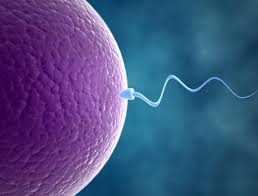
While the ovary is producing this hormone egg waits patiently in the tube for the sperm to reach. If the number of sperms in the semen is good then out of millions of sperms that reach the egg, one will penetrate it and make an embryo. An embryo is the first cell of the future baby with 50% of egg of mother and 50% of sperm of the father. This embryo, which is formed in the tube, slowly moves into the uterus and later sticks to its walls. It then releases another chemical/hormone called HCG, which makes the uterine lining such that period does not come. It is the presence of this chemical that is detected by the urine pregnancy kits. As such the process of pregnancy seems very simple but unfortunately each step, right from the formation of an egg to an egg to sticking of the embryo is dependent on thousands of other chemicals and processes. Even if one tiny step is missed/altered or not timed correctly the woman does not get pregnant.
In most of the cases doctors are able to identify the problems with the big four.
1. Ovary
2. Tube
3. Uterus
4. Sperm

The tests for these structures are generally semen analysis, ultrasonography, blood tests X ray (HSG) or at times laparoscopy. But there are times when all the tests are normal. This is because then the problem may lie in the small tiny processes, which are neither identified nor can be investigated.

Therefore when you go to a doctor, he/she will ask you your age, how long you have been trying and if you have any apparent problems like irregular period’s surgery, etc. This is done to assess your individual ability or chance to get pregnant. Generally around 80% of all women get pregnant within 1-3 years of trying. Fecundity or ability to get pregnant cannot be measured but depends on age (most important), weight, associated diseases, previous pregnancies etc.

If your tests suggest an apparent cause of childlessness then your doctor will treat the cause or plan a treatment that bypasses that obstacle. But sometimes as mentioned previously no apparent cause is found out. In such the couple can either continue to try on their own or try with different treatment options like ovulation induction, IUI or IVF.

At the end of the day the path to get pregnant is a journey which each of us need to undertake. For some this journey is short while for some it is long. For some it is fruitful while some it is not. At time there are no good answers only viable options. But generally with hope, the most difficult of journeys become easy and bear fruit.

Mohak ivf is the best Infertility ivf treatment Hospital in Indore with affordable ivf treatment to achieving pregnancy with world class facilities.You can get Infertility treatment by Best IVF specialists at Mohak Ivf centre in Indore.