
Diagnostic laparoscopy, infertility, and endometriosis—5 years experience

Abstract – 
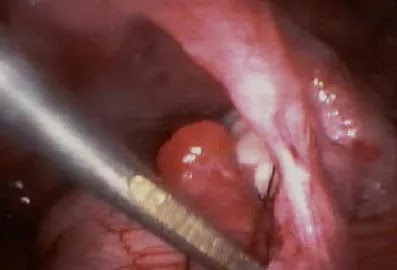
The objectives of this study were to determine the importance of diagnostic laparoscopy for the accurate diagnosis of endometriosis and to correlate the findings with infertility. Participants in this study included 336 women who were 18–45 years old, had no past medical history of abdominal operations, and complained of chronic symptoms of pelvic pain. In all these cases there were no pathological pelvic ultrasound findings. Also, nongynaecological diseases where excluded. Diagnostic laparoscopy was performed in all patients. In 191 women (56.8%) no pathology was found during the diagnostic laparoscopy, and 89 women (26.4%) actually reported improvement or even complete cure from their symptoms after the operation. In the majority of pathological cases the laparoscopy revealed various stages of endometriosis (n = 101; 30%). Other gynecological causes which were diagnosed during the laparoscopy where pelvic adhesions due to inflammatory disease (n = 37; 11%), ovarian cysts (n = 5; 1.5%), and uterine fibroids (n = 2; 0.5%). Diagnostic laparoscopy is the most accurate method for excluding the pathology related with chronic pelvic pain. Endometriosis seems to be responsible for the majority of pathological cases. Almost 60% of women have no pathology when examined with laparoscopy. A high percentage of symptoms can be phycogenic.

Introduction – 
Endometriosis is defined as the presence of endometrial-like tissue outside the uterus, which induces a chronic, inflammatory reaction. While a number of theories have been proposed for the pathogenesis of endometriosis, that of retrograde menstruation is the most popular and plausible. Retrograde menstruation is common and is seen in 75–90% of women who have had laparoscopies at the time of menstruation [1]. Menstrual blood does not always contain endometrial cells and the factors that influence implantation of ectopic endometrium are uncertain, for the prevalence of endometriosis has been estimated as 1–20%. Women with endometriosis appear to have altered immune function, which may permit implantation of regurgitated endometrium. Most endometriotic lesions have the classic blue/black pigmented appearance. Atypical lesions could be similar to blisters, white plaques, nodules, and peritoneal defects [2, 3]. It has been suggested that nonpigmented lesions are more common in younger women and that darker lesions represent older disease [4].

The associated symptoms can impact on general physical, mental, and social well being. However, women may not have any symptoms at all. Laparoscopy is the mainstay of diagnosis and classification of endometriosis. All classification systems for endometriosis are subjective and correlate poorly with pain symptoms but may be of value in infertility prognosis and management.

Materials and methods –
This retrospective study included 336 women who were 18–45 years old. The women in our study group had no past medical history of abdominal operations and all of them complained of symptoms of chronic pelvic pain. The duration of symptoms was at least 6 months in order to be characterized as chronic. Of these women, 106 were also referred for primary or secondary infertility. In all these cases, gynaecological examination and transvaginal pelvic ultrasound were performed. There were no pathological pelvic ultrasound findings. Also, nongynaecological diseases were excluded. Diagnostic laparoscopy was performed in all these women by four different consultant obstetricians gynaecologists.


Results –
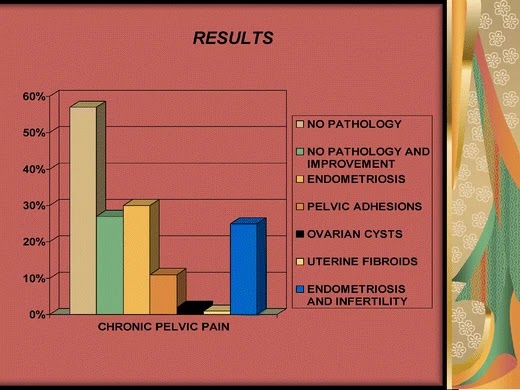
In 191 women (56.8%) no pathology was found during the diagnostic laparoscopy, and 89 women (26.4%) actually reported improvement or even complete cure from their symptoms after the operation. In the majority of pathological cases the laparoscopy revealed various stages of endometriosis (n = 101; 30%) that was diagnosed during the procedure on observation of the lesions and, in cases of endometriomas, also by histopathology report. For the women with endometriosis, almost 85% (n = 84) complained of primary or secondary infertility. Other gynecological causes which were identified with laparoscopy were pelvic adhesions due to inflammatory disease (n = 37; 11%), ovarian cysts (n = 5; 1.5%), and uterine fibroids (n = 2; 0.5%). No pathology was found in 16 (15%) women with primary or secondary infertility. The cause for infertility in 6 (5.5%) women was pelvic adhesions due to inflammatory disease. Endometriosis accounted for 80% (n = 84) of infertility cases (Figs.1).

Discussion – 

It is well known that the degree of endometriosis does not correlate with symptomatology: pelvic pain, dyspareunia, and dysmenorrhea. Moreover, it is not possible to predict which patients will develop progressive disease with resultant pelvic adhesions and ovarian cysts. Finding endometriosis may be coincidental in some women [5]. Careful laparoscopic assessment of the pelvis reveals signs of endometriosis in up to 18% of women with proven fertility [6]. For a definitive diagnosis of endometriosis, visual inspection of the pelvis at laparoscopy is the gold standard investigation unless disease is visible in the posterior vaginal fornix or elsewhere [5]. A meta-analysis against a histological diagnosis showed that a positive laparoscopic examination increases the likelihood of detecting the disease to 32% (95% CI; range, 21–46%) and a negative laparoscopy decreases the likelihood to 0.7% (95% CI; range, 0.1–5%) [7]. There is insufficient evidence to justify scheduling the laparoscopy for a specific time in the menstrual cycle, but it should not be performed during or within 3 months of hormonal treatment to avoid underdiagnosis [8, 9]. At laparoscopy, deeply infiltrating endometriosis may have the appearance of minimal disease, resulting in an underestimation of disease severity [10]. Positive histology confirms the diagnosis of endometriosis; negative histology does not exclude it. Visual inspection is usually adequate but histological confirmation of at least one lesion is ideal. In cases of ovarian endometrioma and in deeply infiltrating disease, histology should be obtained to identify endometriosis and to exclude rare instances of malignancy.

Laparoscopy is the gold standard diagnostic test in clinical practice for the accurate diagnosis of endometriosis [5]. Compared with laparoscopy, transvaginal ultrasound (TVS) has limited value in diagnosing peritoneal endometriosis, but it is a useful tool to make or exclude the diagnosis of an ovarian endometrioma [11]. At present, there is insufficient evidence to indicate that magnetic resonance imaging (MRI) is a useful test to diagnose or exclude endometriosis compared to laparoscopy [5]. A number of markers for endometriosis have been proposed, and probably the most commonly used is the glycoprotein CA-125, an oncofetal celomic epithelium differentiation antigen. It has been suggested that 35 U/ml could be used as a cut-off serum concentration for CA-125, below which endometriosis is unlikely to be present. Unfortunately CA-125 measurements do not correlate well with either the progression of the disease or the response of endometriosis to treatment. Compared with laparoscopy, measuring serum levels of CA-125 has no value as a diagnostic tool. The test’s performance in diagnosing all disease stages is limited, since it has about 28% sensitivity [12]. The test’s performance for moderate to severe endometriosis is a bit better with a sensitivity reaching 47% [12].

There is still debate about the extent to which endometriosis affects fertility in the absence of pelvic deformity. It has been suggested that the peritoneal environment is altered with interference to the sperm motility, to the oocyte pick-up by the fallopian tube, and to fertilization. Fertility can also be impaired due to dyspareunia caused by endometriosis. It is easy to assume that severe endometriosis can affect fertility by distorting pelvic anatomy with adhesions [13, 14]. The effect of endometriosis on assisted conception therapy results is unclear. According to HFEA (Human Fertilization and Embryology Authority), there is no difference in pregnancy rates in patients with endometriosis, without taking into account the stage of endometriosis [15]. Other authors insist that the fertilization rate, pregnancy rate (PR) per transfer, and birth rate were significantly lower in patients with severe endometriosis (stages III and IV) in comparison with patients with tubal infertility [16].

In almost 50–60% of cases with chronic pelvic pain symptoms, no organic cause is found during laparoscopy [17, 18]. In fact, it may be even more difficult to differentiate the organic from psychogenic pain in patients with symptoms lasting more than 6 months. Whatever the original cause of the chronic pelvic pain, it is quite likely that other facts, mainly psychological, could maintain or exacerbate the symptoms. Patients with chronic pelvic pain are more often found to suffer from depression and somatization disorders. These facts could explain that in a significant percentage of patients, although no organic pathology is found, there is improvement or even cure from the symptoms after a diagnostic laparoscopy [17, 19].

According to our study 85% of women with endometriosis also had infertility problems, and endometriosis accounted for almost 80% of all infertility cases. Of all patients, 30% reported chronic pelvic pain due to endometriosis, and in only 16 of 101 (16%) women with endometriosis no fertility problems were found.

Conclusions – Diagnostic laparoscopy is the most accurate method for excluding the pathology related to chronic pelvic pain. Endometriosis seems to be responsible for most pathological cases of chronic pelvic pain and also for the highest percentage of cases who are referred with primary and secondary infertility. Almost 60% of women with symptoms of chronic pelvic pain have no pathology when examined with laparoscopy.

Source – https://gynecolsurg.springeropen.com/articles/10.1007/s10397-007-0357-7

Mohak infertility center is the top leading Best fertility hospital in india, Dr. Shilpa Bhandari is one of the best IVF specialist in indore at Mohak infertility center. providing best IVF treatments, test tube baby treatment and infertility treatment in Indore at an affordable IVF cost in indore. for more info touch with us. Book an appointment Call now 7898047572 For more information, visit – https://www.mohakivf.com

Please go through our social media :


like our page to no more about ivf


Facebook :  https://www.facebook.com/MOHAK-IVF-1167147806785287/

Please do follow on Instagram


Instagram : https://www.instagram.com/mohak_ivf/

To More Post: Failed IVF: Not an end to life
Best infertility hospital in indore | IVF specialist in indore

We at Mohak IVF Center Indore provides you best quality IVF treatment with a high success rate at affordable price. Our goal is to make your parenting dreams come true.

Book an Appointment Now Call 78980–47572 / 80852–77666
For more detail visit www.mohakivf.com

Best infertility hospital in indore, ivf center in indore, test tube baby center in indore, ivf specialist in indore, ivf treatment cost in indore, Best centre for IVF in indore, affordable ivf cost in indore, best fertility hospital in india, best ivf center in mp, infertility treatment in indore, best ivf centre in india, ICSI treatment in indore

IVF center in indore | IVF treatment cost in indore

Eating walnuts promotes male fertility.
Walnuts are very good in enhancing sperm motility, morphology and vitality..!

We at Mohak IVF Center Indore provides you best quality IVF treatment with a high success rate at affordable price. Our goal is to make your parenting dreams come true.

Book an Appointment Now Call 78980–47572 / 80852–77666
For more detail visit www.mohakivf.com

Best infertility hospital in indore, ivf specialist in indore, ivf center in indore, test tube baby center in indore, ivf treatment cost in indore, Best centre for IVF in indore, affordable ivf cost in indore, best fertility hospital in india, best ivf center in mp, infertility treatment in indore, best ivf centre in india, ICSI treatment in indore

ICSI treatment in indore | affordable ivf cost in indore

You are not alone , turn your hope into happiness with Mohak IVF.

We at Mohak IVF Center Indore provides you best quality IVF treatment with a high success rate at affordable price. Our goal is to make your parenting dreams come true.

अपॉइंटमेंट बुक करें अब कॉल करें 78980–47572 / 80852–77666
अधिक जानकारी के लिए विजिट करें www.mohakivf.com

Best infertility hospital in indore, ivf specialist in indore, ivf center in indore, test tube baby center in indore, ivf treatment cost in indore, Best centre for IVF in indore, affordable ivf cost in indore, best fertility hospital in india, best ivf center in mp, infertility treatment in indore, best ivf centre in india, ICSI treatment in indore

Can open tubal microsurgery still be helpful in tubal infertility treatment?

In 30 years, 1,669 patients underwent open microsurgery for tubal diseases. Several techniques like adhesiolysis, reanastomosis, fimbrioplasty, salpingoneostomy, proximal reconstruction, isthmo-ostial anastomosis and reimplantation are described. Results were excellent for patients with a favourable prognosis (1,517 patients) and with very high pregnancy rate: 80% pregnancies with delivery for tubal reversal, 68% for proximal diseases, 75.1% for fimbrioplasty and 55% for salpingoneostomy. Risks of ectopic pregnancy were very low: 1.5% for tubal reversal (because the tubes were healthy), 4% for proximal diseases, 4% for fimbrioplasty and 6.7% for salpingoneostomy. Results were very low for patients with a poor prognosis (152 patients): 10% pregnancies with delivery for distal diseases, less than 20% for proximal diseases and 22% ectopic pregnancies. Open microsurgery can still be helpful in treating tubal infertility: results are better than those obtained with laparoscopic reconstructive surgery and better than those obtained with in vitro fertilization for patients with a favourable prognosis. Patients are only operated one time and can have several pregnancies. Open tubal microsurgery is a minimal invasive surgery and saves costs (it requires a small number of instruments and minimises sutures; patients can return home 4 days after surgery, at the latest). Results on fertility are very favourable.

Between 1977 and 2007, 1,669 patients underwent a minilaparotomy for tubal diseases. Minilaparotomy means a laparotomy with minimal tissue injury, applying microsurgical principles and procedures.
One of the first principles we followed was the temporary but absolute contraindication for surgery in case of active infection and active inflammation (for example endometriotic red lesions).
We also applied the following principles:

  • gentle handling of tissues
  • atraumatic manipulation of the tubal serosa and mucosae, of the ovary and of the peritoneum
  • selective bipolar coagulation: only the vessels (and not the surrounding area) must be dessicated by fine bipolar microelectrodes
  • continuous irrigation to keep the surgical area clear at all times and to avoid the tissue from drying out (and especially the tubal serosa and the ovary)
  • perfect protection of the abdominopelvic cavity against infection risk using the sterile “wound drape”
  • complete resection of pathologic tissues
  • complete restoration of the serosa: closure of all peritoneal defects to avoid formation of de novo adhesion and recurrence of previous adhesion (peritoneal defects in case of adnexal disease due to previous infection or inflammation do not scar easily and quickly because the subserosal tissue is not a normal tissue; it is usually rich in inflammatory cells). A peritoneal closure with fine material and inverted stitches scars better and faster than a large defect without peritoneal closure
  • use of very fine resorbable sutures 7/0 and 8/0
  • last, use of a well mastered surgical technique: the surgery must be successful the first time. Repeat surgery never gives favourable results

Most of these principles were described by Gomel [1] in 1977. Open microsurgery is a method that proves to be cost efficient: the same microscope has been used for 17 years. Sets of instruments were only changed every 4 to 5 years. We only need one suture of 7/0 and one of 8/0 for two tubes. The maximum length of hospital stay is 4 days (only 3 days for 40% of the patients).
Materials and methodsPatient characteristics

  • bifocal tubal lesions (distal and proximal occlusion in the same tube)
  • distal tubal lesions with poor prognosis: extended dense adhesion, sclerohypertrophic tube, intra-ampullary adhesions, lack of mucosal folds [2]
  • significant and extended proximal lesions including the isthm, the intramural segment and the ostium uterinum

After 1987, when in vitro fertilization (IVF) results became acceptable, we abandoned reconstructive surgery for these lesions and decided to perform salpingectomy in order to increase IVF results. We only operated tubal lesions with a favourable prognosis.
As a consequence, 1,517 patients with a favourable prognosis underwent reconstructive microsurgery between 1977 and 2007:
485 tubal reversals
527 distal tubal lesions
505 proximal tubal lesions
MaterialsFrom 1977 to 1994, we used a Zeiss OPMI 6 microscope. A Leica-Wild M-690 was introduced after 1994. Five instruments of 15 and 18 cm long were needed:

  • two Moria forceps with very fine extremity (0.5 and 0.2 mm)
  • one Martin–Landanger microscissor
  • one Jacobson–Aesculap needle holder
  • one Codman forceps for bipolar coagulation
  • For two tubes, one 7/0 and one 8/0 polydioxanone sutures are usually sufficient.

MethodsPreoperative investigationsAll patients had complete investigations: hormonal analysis, male analysis, hysterosalpingography, hysteroscopy and sometimes recanalisation, diagnostic laparoscopy with blue dye test. Results were written down before surgery and then compared with operative images (all surgery were taped first with 8-, then 16-mm film camera Beaulieu, and then with 3-CCD Sony DXC 930 P video camera) and with postoperative histological examination of all resected lesions. The analysis is therefore not entirely retrospective.

Preoperation and per operation procedures

Prior to the laparotomy, a Pezzer catheter is introduced into the uterine cavity. This catheter is brought into sterile fields and allows the preoperative injection of sterile dilute methylene blue solution for verification of the tubal patency. After a short Pfannenstiel incision (6/7 cm), we protect the pelvis with a “wound-drape”. The uterus and adnexa are elevated by packing the Douglas cul-de-sac with moistened compresses. Continuous irrigation of the surgical area using a physiological salt solution mixed with noxytioline and corticoid (permanently evacuated by a Redon drain positioned in the Douglas pouch) keeps the operating area always clear. It keeps the tissues always moistened to prevent tissue drying, avoids formation of adhesion and allows for bipolar coagulation. Extreme gentleness is exercised. Tissue traumatism is prevented by the gentle handling the tubes and the ovary with fingers rather than sharp instruments. At the end of the operating time, a meticulous cleaning of the pelvic cavity is useful.

For 30 years, several peritoneal instillates were used: Ringer’s lactate which is not compatible with noxytioline, 30% dextran 70, Intergel, icodextrin 4% solution, etc., but we think it is not necessary to use instillates if the microsurgical technique is perfect: minimal tissue traumatism, perfect haemostasis, no tissue necrosis, no infection risk. We do not use these instillates in case of tubal reversal because the tubes are healthy; there is no peritoneal defect and no risk of adhesion.
Postoperation procedureAll patients (except tubal reversal) were treated with antibiotics and dexamethasone during the postoperative inflammatory time (18 to 25 days).
Patients could return home 4 days after surgery (40% of them left hospital after 3 days). Ovarian induction was prescribed after the second postoperative menstruation. Hysterosalpingography was prescribed 6 months and laparoscopy 1 year after surgery if the patient failed to conceive.
Follow-up procedureNinety-one percent of patients were followed up for at least 2 years. Loss of follow-up patients was classified as surgical failure because infertile women always inform their surgeon when they are pregnant or when they have an ectopic pregnancy.

Mohak infertility center is one of the leading Best fertility hospital in indore, India and is known for its quality treatments in the field of fertility care. We provide treatments like IVF treatment, IUI treatment, ICSI treatment, and test tube baby treatment, infertility treatment and ivf treatment cost in indore. If you are trying to get pregnant for a very long time but you have had no success in it, then the experts at our fertility center will surely provide you with the necessary solution. Book an appointment Call now 7898047572 For more information, visit – https://www.mohakivf.com

Please go through our social media :

like our page to no more about ivf

Facebook :  https://www.facebook.com/MOHAK-IVF-1167147806785287/

Please do follow on Instagram

Instagram : https://www.instagram.com/mohak_ivf/

To More PostEndometrial scratch for infertile polycystic ovary syndrome (PCOS) women undergoing laparoscopic ovarian drilling: a randomized controlled trial

Best fertility hospital in india | Best ivf centre in india

Female infertility is often stressful and society make it odd for her to live freely..
But you need not to be stressed because It is a medical condition and we have solutions for you..
We at Mohak IVF Center Indore provides you best quality IVF treatment with a high success rate at affordable price. Our goal is to make your parenting dreams come true.

Book an Appointment Now Call 78980–47572 / 80852–77666
For more detail visit www.mohakivf.com

Best ivf centre in india, Best infertility hospital in indore, ivf specialist in indore, ivf center in indore, test tube baby center in indore, ivf treatment cost in indore, Best centre for IVF in indore, affordable ivf cost in indore, best fertility hospital in india, best ivf center in mp, infertility treatment in indore, ICSI treatment in indore

Best IVF centre in India | Best fertility hospital in India

Azoospermia एक चिकित्सा स्थिति है जहां पुरुषों में वीर्य में कोई शुक्राणु नहीं मिलता है ।

हम मौहक IVF सेंटर इंदौर में, सस्ती कीमतों पर उच्च सफलता दर के साथ गुणवत्ता ivf उपचार के साथ प्रदान करते हैं । हमारा लक्ष्य आपके परवरिश के सपनों को सच बनाने के लिए है ।

अपॉइंटमेंट बुक करें अब कॉल करें 78980–47572 / 80852–77666
अधिक जानकारी के लिए विजिट करें www.mohakivf.com

Best infertility hospital in indore, ivf center in indore, test tube baby center in indore, ivf treatment cost in indore, Best centre for IVF in indore, affordable ivf cost in indore, best fertility hospital in india, best ivf center in mp, infertility treatment in indore, best ivf centre in india, ICSI treatment in indore, IVF specialist in indore

IVF specialist in indore | IVFtreatment cost in indore

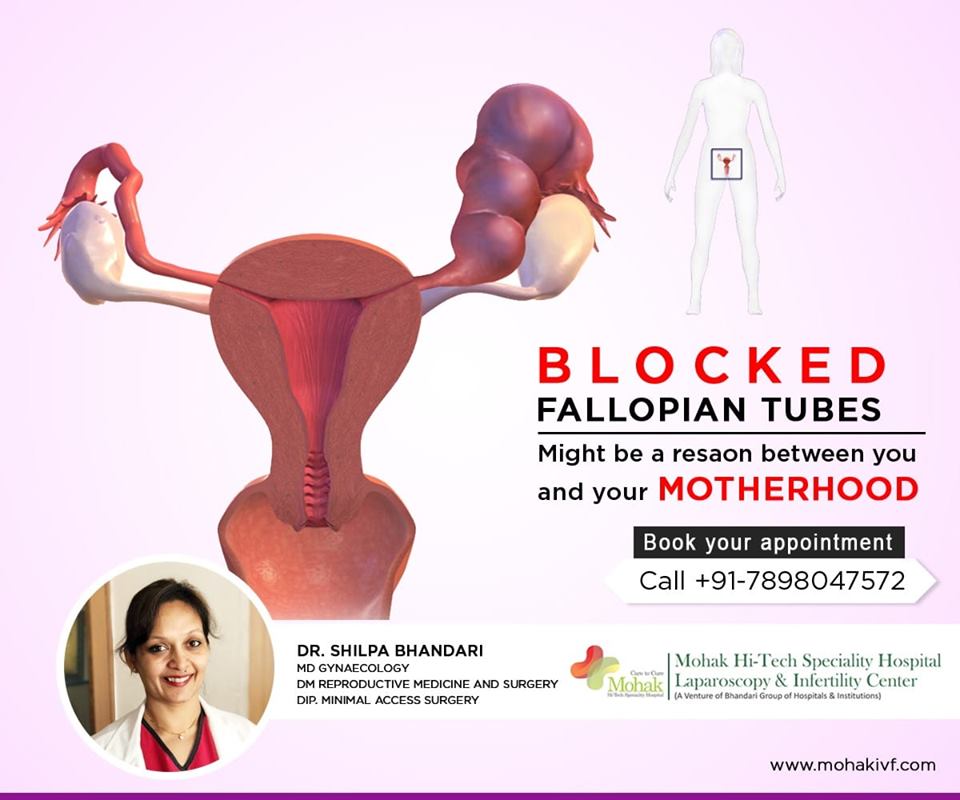
अवरुद्ध फैलोपियन ट्यूब आपके और आपके मातृत्व के बीच एक कारण हो सकता है ।
यदि आपको गर्भवती होने में कुछ कठिनाई होती है तो हमारे विशेषज्ञ के साथ अपनी समस्या साझा करें ।

हम मौहक IVF सेंटर इंदौर में आपको सबसे अच्छी गुणवत्ता IVF उपचार प्रदान करते हैं जो सस्ती कीमत पर उच्च सफलता दर के साथ है । हमारा लक्ष्य आपके परवरिश के सपनों को सच बनाने के लिए है ।

अपॉइंटमेंट बुक करें अब कॉल करें 78980–47572 / 80852–77666
अधिक जानकारी के लिए विजिट करें www.mohakivf.com

Best infertility hospital in indore, ivf specialist in indore, ivf center in indore, test tube baby center in indore, ivf treatment cost in indore, Best centre for IVF in indore, affordable ivf cost in indore, best fertility hospital in india, best ivf center in mp, infertility treatment in indore, best ivf centre in india, ICSI treatment in indore

Endometrial scratch for infertile polycystic ovary syndrome (PCOS) women undergoing laparoscopic ovarian drilling: a randomized controlled trial

AbstractBackground – Women with polycystic ovarian syndrome (PCOS) may undergo laparoscopic ovarian drilling (LOD). To find out whether endometrial scratch, at time of LOD, could improve live birth rate in subfertile women with PCOS, a randomized controlled trial was conducted.

Results –There was no evidence of a significant difference in cumulative live birth rate between women who had endometrial scratch at time of LOD and those who had LOD only (38.1% and 34.3% respectively, odds ratio 1.18, 95% CI (0.67, 2.07); p = 0.57).
Conclusion – Women undergoing laparoscopic ovarian drilling should not be subjected to endometrial scratch as it does not lead to improvement in live birth rate. The study was prospectively registered on 25 April 2014 in ClinicalTrials.gov with identifier number NCT02140398.

Background
Polycystic ovarian syndrome is the most common cause of anovulatory subfertility [1]. Weight reduction, lifestyle modification, and ovulation induction are the recommended initial management strategies [2, 3]. Laparoscopic ovarian drilling (LOD) has been suggested to induce ovulation in these women, especially those who fail to ovulate through ovulatory medications [4,5,6]. It has been suggested that the procedure is as effective as ovarian stimulation with exogenous gonadotropins [7], yet it does not increase multiple pregnancy rates or ovarian hyperstimulation syndrome (OHSS) rates. Many women may ovulate after LOD, yet they fail to conceive [8]. Those women may need to undergo IVF treatment in their pursuit for a baby.

Endometrial scratching is a procedure where the endometrium is subjected to physical trauma that caused injury to the functional layer of the endometrium mechanically [9,10,11,12]. It has been suggested that endometrial injury could improve IVF outcome in women with recurrent implantation failure after IVF [13]. Nonetheless, endometrial scratch has been also proposed to overcome subfertility in women with unexplained infertility [14]. Randomized controlled trials have also shown improvements of intrauterine insemination (IUI) results in women subjected to controlled endometrial injury prior to insemination [9, 10]. However, there were some other studies that have shown no benefit from the procedure [15, 16].

The aim of our study was to find out whether performing endometrial scratch at time of laparoscopic drilling would improve live birth rate in subfertile women with PCOS.


Patients and methods

Study design and participants – We conducted a parallel randomized controlled trial (RCT), approved by our university ethics committee. We approached all infertile women with anovulatory infertility due to PCOS referred for laparoscopic ovarian drilling in Mansoura University Teaching Hospitals in Mansoura, Egypt. Our hospital is a tertiary care center conducting between 600 and 700 laparoscopic surgeries per year for infertile women. The study was conducted during the period from April 2014 to April 2015 (last patient enrollment). Follow-up was continued for 9 months after laparoscopy. The last pregnancy was in December 2015. Last data collection was in September 2016. An informed written consent was obtained from all women who participated in the study.

Our inclusion criteria were women aged 20 and less than 39 and women with PCOS as diagnosed by Rotterdam criteria, fertile semen analysis according to WHO 2010, and bilateral tubal patency as demonstrated by hysterosalpingogram (HSG) [17, 18]. The exclusion criteria were suspected endometriosis, suspected uterine cavity anomaly or mass, associated male factor infertility, presence of endocrinopathy as thyroid dysfunction, and women subjected to endometrial curettage for any reason in the last 6 months.

Intervention

Women were admitted to our hospital 1 day before laparoscopic drilling. Women were randomized into two groups: group A (the intervention group) and group B (the control group). Randomization was through a computer-generated list of random numbers. Allocation of women to groups was through an opaque sealed envelope that had to be picked by a nurse in the operative theater. The surgeon was not blinded to the procedure while patients and data assessor were blinded to their allocation.
All women underwent a three-puncture laparoscopy procedure where laparoscopic ovarian drilling (LOD) was achieved. Ovarian drilling was performed through monopolar coagulation diathermy. Four punctures were performed. Each penetrates about 4 mm depth, using 40-W power that lasts for 4 s. In the intervention group (group A), endometrial scratching was performed at the end of laparoscopy by endometrial curette. The curette was introduced gently through the cervix up to the uterine fundus then withdrawn for 1 or 2 cm. One act of scratching was performed on the posterior wall of the uterus after the end of drilling. The obtained specimens were sent for histopathology. The control group (group B) had LOD only, and no endometrial scratch was performed.
Women in both groups were seen 3 months after laparoscopy and were asked whether they had a positive pregnancy test, still have oligomenorrhea, or had had regular periods. Women who had regular periods were subjected to folliculometry to confirm the establishment of ovulation while those with oligomenorrhea were subjected to ovulation induction with clomiphene citrate, tamoxifen, or letrozole. Women who did not respond to ovulatory oral medications were stimulated using exogenous gonadotropins using the low-dose step-up protocol with a 37.5 IU starting dose [19]. The primary outcome measure in this trial was live birth rate per woman randomized. Secondary outcome measures were clinical pregnancy rate, time to pregnancy, miscarriage rate, and multiple pregnancy rate. The study was registered in ClinicalTrials.gov with identifier number NCT02140398.

Definitions – Clinical pregnancy was defined as the presence of intrauterine gestational sac 1 or 2 weeks after positive pregnancy test in blood. Live birth was defined as the delivery of living fetus after 24 weeks gestation.
Statistical analysis – We estimated that the pregnancy rate after laparoscopic ovarian drilling was around 50% [20]. The intervention was suggested to boost pregnancy rate up to 70%. We calculated that we will need to study 93 experimental subjects and 93 control subjects to be able to reject the null hypothesis that the failure rates for experimental and control subjects are equal with a study power (probability) of 80%. The type I error probability associated with this test of this null hypothesis is 0.05 [21]. To compensate for dropouts, we calculated that we needed to randomize 210 women. We used SPSS 15 program. We adopted the intention-to-treat analysis.

Source –  https://mefj.springeropen.com/articles/10.1186/s43043-019-0001-2

We at Mohak infertility center Indore provides you best quality IVF treatment with a high success rate at affordable price. Our goal is to make your parenting dreams come true.

Mohak infertility center, one of the Best Infertility Hospitals in Indore, india provides you International Standard Infertility Treatment along with assisted reproductive technologies like IUI, IVF, ICSI ,etc at affordable IVF treatment cost in indore / Test tube Baby Treatment cost along with the satisfaction of being consulted by the most renowned IVF specialist/ Doctor in Indore ,M.P. Come join best centre for IVF treatment in indore in our voyage towards better healthcare facilities for infertile couples and experience the Best Infertility Treatment in Indore. To Book an Appointment Now Call 78980-47572 / 80852-77666. For more detail visit www.mohakivf.com

Please go through our social media :

like our page to no more about ivf

Facebook :  https://www.facebook.com/MOHAK-IVF-1167147806785287/

Please do follow on Instagram

Instagram : https://www.instagram.com/mohak_ivf/

To More Post: Fallopian Tube And Its Function

IVF center in indore | Infertility treatment in indore

There is no better feeling than the movement of life inside you and every mother experiences it in a different way.If you’ve had some difficulty in getting pregnant share your problem with our expert. Take a step toward parenthood with us.

We at Mohak IVF Center Indore provides you best quality IVF treatment with a high success rate at affordable price. Our goal is to make your parenting dreams come true.

Book an Appointment Now Call 78980–47572 / 80852–77666
For more detail visit www.mohakivf.com

Best infertility hospital in indore, ivf specialist in indore, ivf center in indore, test tube baby center in indore, ivf treatment cost in indore, Best centre for IVF in indore, affordable ivf cost in indore, best fertility hospital in india, best ivf center in mp, infertility treatment in indore, best ivf centre in india, ICSI treatment in indore